Conducting an unbiased Dynamiq AI Review is essential for organizations because most enterprises do not need another experimental AI toolkit. They need a way to solve the architectural bottlenecks, unpredictable API costs, and data sovereignty risks that quietly stall AI projects before they ever hit production.
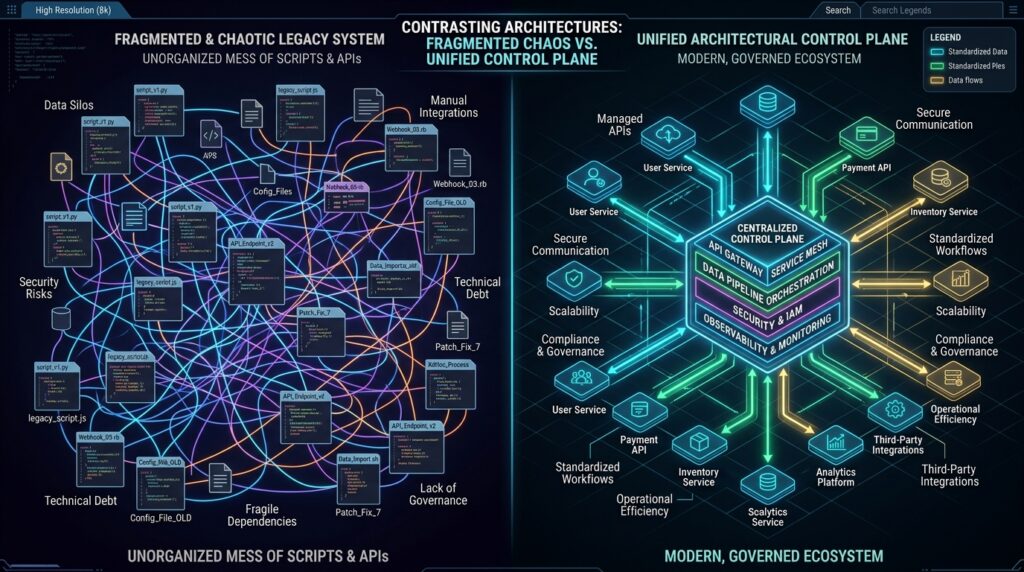
While open-source frameworks like LangChain or CrewAI work well for early-stage prototyping, they often leave internal systems architects with a heavy burden: building custom infrastructure for multi-tenant isolation, state persistence, and predictable runtime security.
The Dynamiq AI platform targets this exact problem. It transitions organizations away from temporary developer scripts toward a hardened, containerized orchestration environment. If your company is trying to scale AI agents locally without exposing proprietary data to public clouds, this evaluation will help you determine your next move.
Dynamiq AI Review: Product Overview & Core Architecture
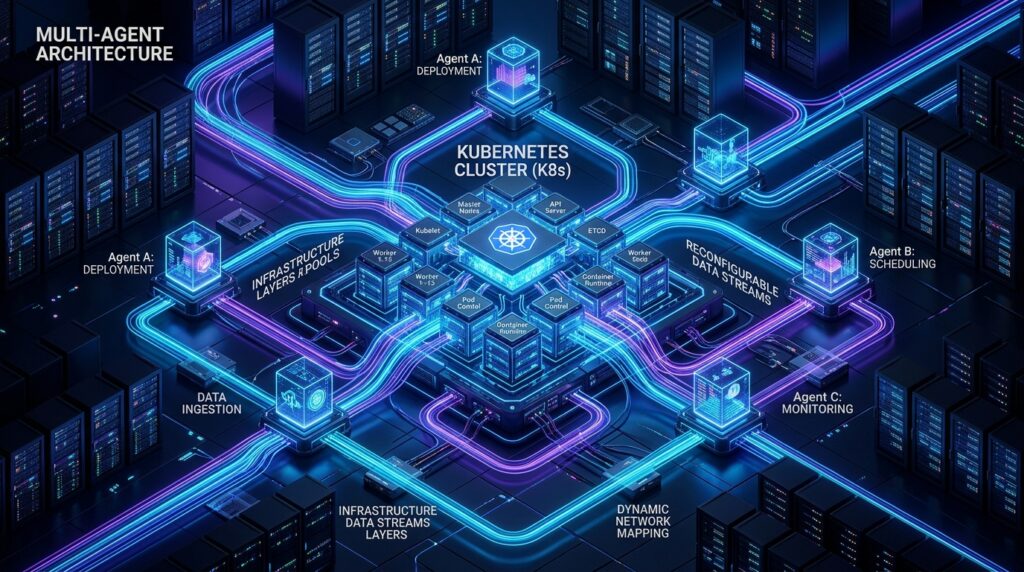
Dynamiq is a Kubernetes-based microservices platform designed to orchestrate agentic AI applications across hybrid-cloud infrastructures, private virtual private clouds (VPCs), and air-gapped on-premise hardware. Instead of forcing development teams to stitch together disjointed APIs, databases, and monitoring tools, it consolidates orchestration, local model routing, and strict data guardrails into a unified system.
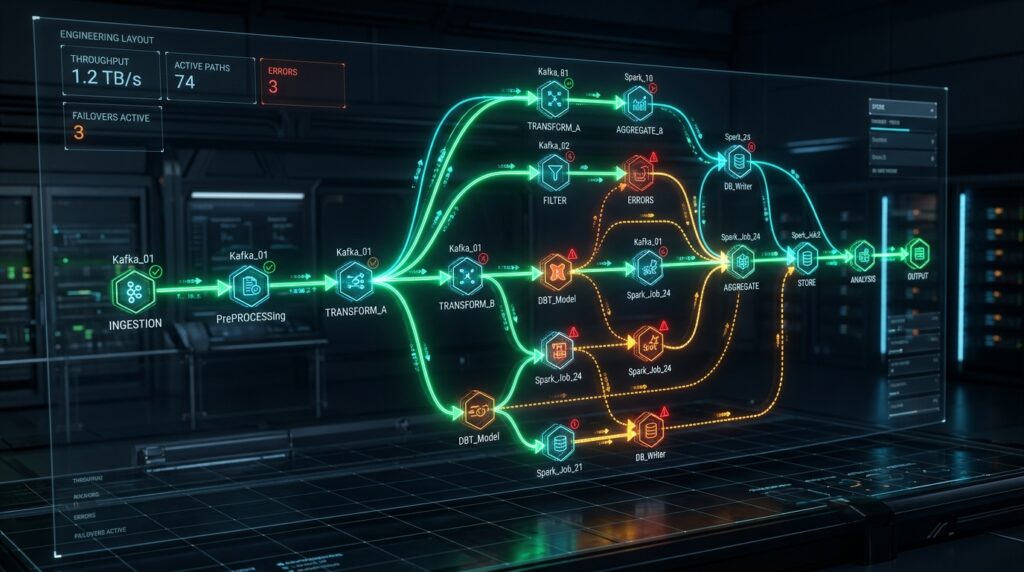
At its core, Dynamiq replaces simple linear event loops with a stateful Directed Acyclic Graph (DAG) system. Managed by a dedicated orchestration engine (GraphOrchestrator), the platform tracks execution states through a persistence layer. If a local hardware node fails during a complex, multi-step agentic run, the system recovers from the exact point of interruption rather than crashing or restarting the entire sequence.
Best For
- Regulated Industries: Ideal for financial institutions, healthcare providers, and legal teams requiring complete data control inside an air-gapped or private cloud environment.
- High-Volume Deployments: Perfect for companies looking to stabilize operational costs by replacing variable public cloud token fees with open-source models hosted on local GPUs.
- Mid-to-Large Engineering Teams: Best suited for organizations with existing Kubernetes expertise that want to accelerate agent development without sacrificing infrastructure control.
System Architecture Breakdown
| System Attribute | Dynamiq Enterprise Platform | LangChain SDK / CrewAI Frameworks |
| System Architecture | Containerized Kubernetes microservices with Helm-based orchestration. | Developer-centric code libraries; deployments require custom architecture. |
| State Persistence | Native checkpointing and state tracking built into PostgreSQL/Redis. | Transient by default; requires custom state-saving logic. |
| Data Control & Auditing | Local logging with secure OpenTelemetry export capabilities. | Basic execution traces; requires integration with third-party SaaS tools. |
| Security Standards | Native compliance controls (SOC 2, GDPR, HIPAA, and OWASP). | Relies entirely on external application security configurations. |
| Knowledge Ingestion | Automated sync with corporate shares (S3, SharePoint, Google Drive). | Manual scripting required for ingestion, parsing, and vectorization. |
Key Strengths
- Native State Management: The platform’s built-in checkpointing engine automatically logs agent execution states to local databases like PostgreSQL or Redis. This setup removes the need for developers to manually build failover logic for long-running workflows.
- Decoupled Model Routing: Dynamiq separates application logic from the underlying AI models. Enterprises can route inference requests to secure private clusters—such as IBM watsonx (Granite models) or NVIDIA NIM containers—complete with automated load balancing and intelligent failover.
- Secure Local Fine-Tuning: The platform features a built-in engine for Low-Rank Adaptation (LoRA). This allows teams to refine open-source models using proprietary corporate history without transmitting data outside the corporate firewall. The weight updates follow the standard formulation:$$\Delta W = W_0 + \frac{\alpha}{r}(B \cdot A)$$Where $W_0$ represents the frozen base model weights, $B$ and $A$ are the low-rank matrices trained on your internal data, and $\alpha$ balances the adaptation scale.

- Three-Stage Validation Pipeline: To minimize inaccuracies, Dynamiq runs text inputs and outputs through automated filters. It screens incoming prompts with Llama Guard to prevent injections, checks data formatting against strict JSON schemas, and scores responses for factual grounding against your vector database.
Limitations
- High Infrastructure Demands: Running Dynamiq locally shifts the burden of hardware performance entirely to your internal IT team. Managing physical GPU clusters and complex network fabrics requires highly specialized skills.
- Data Preparation Bottlenecks: The platform’s automated ingestion engine is only as good as the source material. If your corporate shared drives are filled with unorganized or conflicting legacy documents, the system will output poor results until the data is manually cleaned.
- Visual Workspace Complexity: While the low-code canvas simplifies basic sequential workflows, mapping complex business processes with nested loops can result in confusing visual layouts. Advanced logic still requires developers to drop back into the Python SDK, reintroducing traditional software maintenance.
Pricing
Dynamiq moves away from the variable, unpredictable per-token pricing structures of public cloud APIs. The platform uses a flat annual enterprise licensing fee (typically starting around $150,000 for self-hosted enterprise VPC setups).
While this eliminates token fees, organizations must account for the upfront capital expenditure (CapEx) of physical hardware or private cloud compute instances, along with routine maintenance and utility costs.
Editor’s Take
If your organization operates within a heavily regulated sector and expects your AI workloads to process billions of tokens over the next few years, then investing in the Dynamiq platform offers a highly stable and secure path forward. Because keeping orchestration, storage, and open-source model execution completely inside your own private infrastructure removes unpredictable cloud bills and minimizes compliance risks simultaneously.
Alternatives
- Langflow / Flowise: Strong alternatives if you are looking for free, open-source visual workflow builders for rapid prototyping, provided you are comfortable building your own hosting and security layers.
- n8n (Advanced AI Version): A viable alternative if your focus is primarily on broad enterprise workflow automation and SaaS integrations rather than dedicated, deep local LLM infrastructure and fine-tuning.
- Dify: A comparable platform offering visual application development, best suited for teams that prefer cloud-managed options over heavy on-premise container deployment.
Pros & Cons
Pros
- Flat enterprise licensing eliminates unpredictable public API token costs.
- Air-gapped and private VPC deployment options keep all corporate data safe inside your firewall.
- Native DAG execution engine provides reliable automated failover and state tracking.
- Built-in guardrails automatically screen inputs and validate output formats.
Cons
- Requires deep internal Kubernetes and Helm orchestration expertise to deploy and maintain.
- Upfront GPU hardware or private cloud compute costs can be substantial.
- Complex business processes can make the low-code visual canvas difficult to manage.
Final Recommendation: What Should You Do Next?
Never buy enterprise software simply because the technology sounds impressive. Technology only matters if it removes a specific operational bottleneck.
If your company processes low volumes of non-sensitive data, stick to public cloud APIs—they require less maintenance and offer lower initial costs. However, if your transaction volume is growing rapidly and data privacy is non-negotiable, continuing with public APIs will eventually lead to high costs and regulatory hurdles.
Your Action Plan:
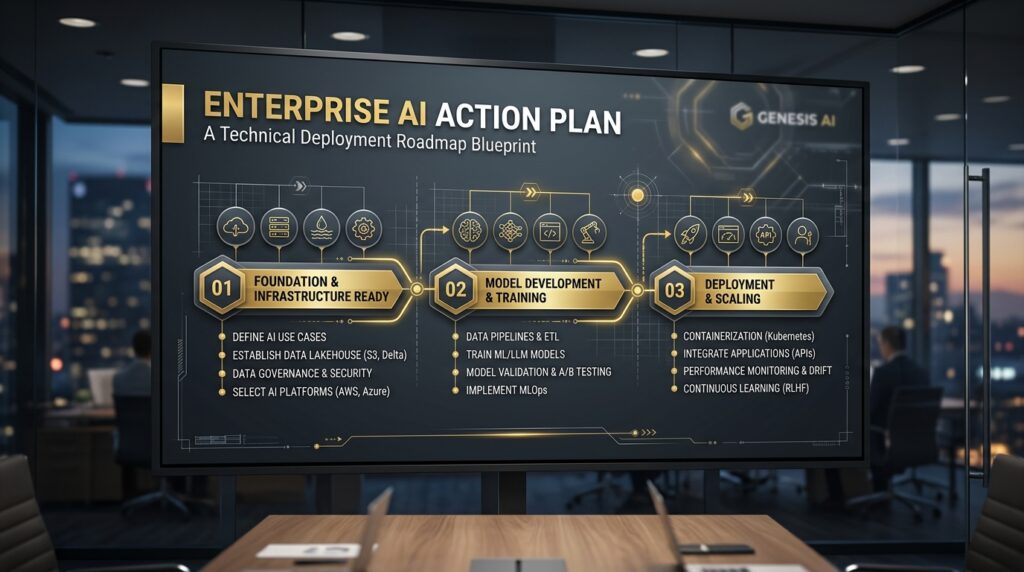
- Audit Your Infrastructure Readiness: Determine if your operations team has the technical skills required to manage high-performance container environments. If you lack Kubernetes experience, plan to add external support before attempting an on-premise deployment.
- Start with a Private VPC Pilot: Set up a pilot deployment using a localized configuration. Choose a single, high-impact workflow—such as automated internal contract analysis or IT ticket routing—to validate performance before scaling.
- Clean Your Core Datasets: Before connecting large corporate shared folders to the ingestion pipeline, dedicate time to organizing your internal documentation. Eliminating obsolete files early prevents your vector database from indexing incorrect information.
Editor’s Take
If your organization operates within a heavily regulated sector and expects your AI workloads to process billions of tokens over the next few years, then investing in the Dynamiq platform offers a highly stable and secure path forward. Because keeping orchestration, storage, and open-source model execution completely inside your own private infrastructure removes unpredictable cloud bills and minimizes compliance risks simultaneously.
To evaluate how this localized containerized orchestration ecosystem compares against raw hardware silicon designed specifically to crush memory constraints, read our intensive SambaNova SN40L RDU Review. For companies investigating turnkey enterprise infrastructure fabrics built on top of private clouds, we highly recommend exploring the HPE Private Cloud AI Review. Furthermore, you can analyze how software automation layers interface directly with legacy mainframes without API access by reading our ElectroNeek On-Premise Review, or evaluate localized processing edge appliances through the Qualcomm Dragonwing AI Review. For historical framework references, feel free to check our baseline Top 5 Zanus AI Alternative architecture manual, alongside specialized deployment frameworks like Zanus AI Deployment strategies, Zanus AI for Construction, and Zanus AI for Logistics. To maintain continuous alignment with high-performance infrastructure evaluations, ensure you bookmark our central AI Review Zones portal.
References
- GetDynamiq Official Site: Dynamiq Operating Platform for GenAI Applications
- GitHub Repository: Dynamiq Orchestration Framework Documentation and Core Source Code
- AWS Marketplace Listing: Dynamiq Gen AI Platform – Enterprise VPC Deployment Page
- Qdrant Integration Documentation: Partner Integrations: Connecting Dynamiq to Qdrant Vector Databases