
AI-Enhanced RPA vs GenAI APIs: The Legacy System Bottleneck and Computer Vision GUI Solutions
Conducting a thorough ElectroNeek On-Premise Review is essential for enterprises facing the legacy system bottleneck where modern applications hit an insurmountable physical barrier: legacy systems that completely lack API support.
Core systems such as AS400 terminals, classic Core Banking applications, deeply customized Enterprise Resource Planning (ERP) software tailored over decades, or offline Excel spreadsheets function as closed data silos. They operate on obsolete internal network protocols or localized file storage. Without standardized connection gateways like RESTful or SOAP APIs, Large Language Models (LLMs) and GenAI APIs have no direct mechanism to access, read, or write data into these systems.
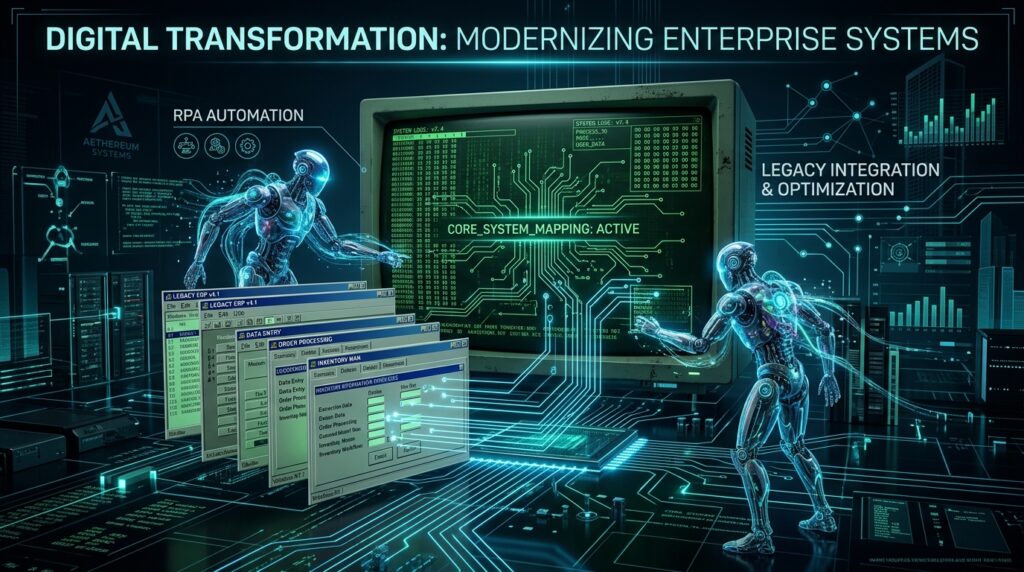
To bridge this operational disconnect, ElectroNeek combines traditional Robotic Process Automation (RPA) with an intelligent abstraction layer designed to interpret Graphical User Interfaces (GUIs) via Computer Vision and Intelligent Document Processing (IDP) through its IntelliDocs engine.
ElectroNeek’s Legacy Interaction Mechanisms
| Technology Component | Technical Operation | Architectural Role |
| Computer Vision | Scans and analyzes screen presentation layers to automatically detect buttons, input fields, and text labels dynamically. | Replaces brittle static selectors (DOM/XPath) with resilient, dynamic AI-driven selectors. |
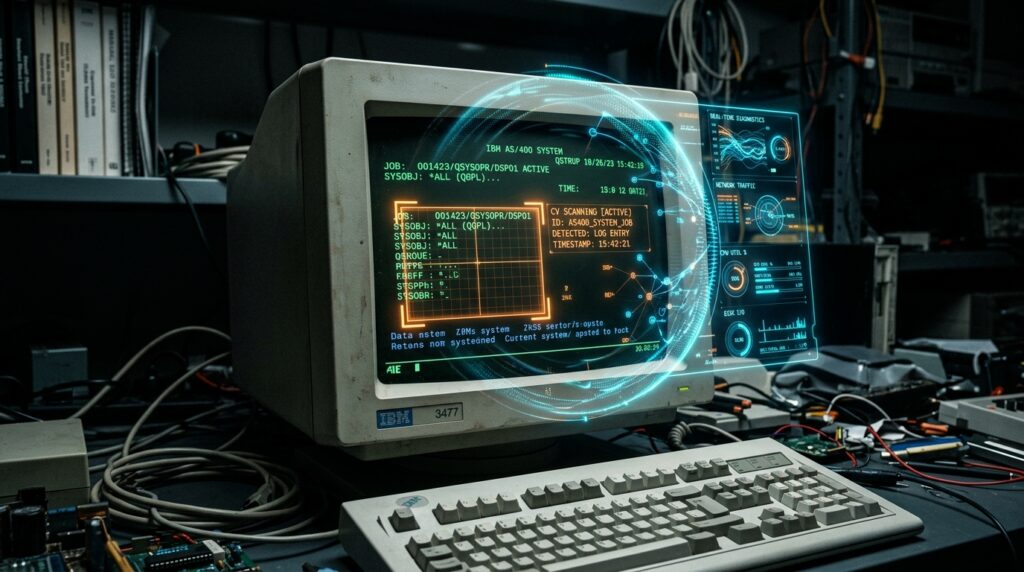
| Terminal Picker & Keystroke Automation | Precisely maps character coordinates on simulated AS400 terminal windows, sending keystroke macros to navigate menus. | Executes direct data input and extraction from classic “green screen” mainframes. |
| IntelliDocs (IDP) | Utilizes over 3,000 pre-trained machine learning models to classify, extract, and validate unstructured documents. | Converts unstructured documents (invoices, contracts) into structured JSON formats for system ingestion. |
| Terminal Emulation (IBM PCOMM) | Integrates directly with emulation utilities like IBM Personal Communications Version 14 via remote desktop hooks. | Establishes a direct, unmediated communication channel with the mainframe operating system. |
This structural integration yields an optimized execution model: while the integrated GenAI model (Easley AI) serves as the “brain” for unstructured data processing and logical decision-making, ElectroNeek’s software runners act as the “hands” performing physical interactions with non-API application interfaces.
The software agent launches applications, identifies targets using computer vision, and simulates keyboard inputs to manipulate data. This architecture allows enterprises to harness advanced AI capabilities across legacy infrastructure without requiring complex, risky modifications to the underlying source code.
The Unlimited Bot Licensing Model: ElectroNeek On-Premise Review & 3-Year TCO Analysis
In large-scale enterprise automation deployments, licensing economics represent a primary determinant of project viability. Legacy RPA vendors like UiPath and Automation Anywhere typically enforce a runtime-based pricing strategy (Per-Bot Licensing). This architecture introduces significant financial friction when expanding automation initiatives; the marginal cost of automating a new workflow scales linearly with the number of Unattended Robots required.
Conversely, ElectroNeek employs an Unlimited Bot Licensing model. Enterprises pay a predictable, flat annual platform subscription fee (such as the Enterprise Cloud or On-Premise tier). This flat rate covers the Studio Pro development environment and grants the right to deploy an unlimited number of Bot Runner execution agents—both Attended and Unattended—across any infrastructure layer.
The financial leverage inherent in this model is demonstrated below via a 3-year Total Cost of Ownership (TCO) projection. This scenario assumes an enterprise utilizing 5 developer seats, scaling from 10 to 50, and ultimately 100 Unattended Bots.
Cumulative 3-Year TCO Analysis (USD)
| Configuration Profile & Scale | UiPath | Automation Anywhere | ElectroNeek (Enterprise Flat-rate) |
| Estimated Annual Unit Pricing | |||
| – Development Environment | $3,000 / Seat | $2,500 / Seat | Included in flat subscription |
| – Central Control Plane | $20,000 / Instance | $15,000 / Instance | Included in flat subscription |
| – Unattended Runtime Agent | $8,000 / Bot / Year | $8,000 / Bot / Year | Free (Unlimited) |
| Scenario 1: 10 Bots Scale | |||
| – Year 1 Capital Outlay | $115,000 | $107,500 | $36,000 |
| – Total 3-Year Cumulative TCO | $345,000 | $322,500 | $108,000 |
| ElectroNeek Cumulative Savings | Baseline | Baseline | Saves $237,000 (vs. UiPath) |
| Scenario 2: 50 Bots Scale | |||
| – Year 1 Capital Outlay | $435,000 | $427,500 | $36,000 |
| – Total 3-Year Cumulative TCO | $1,305,000 | $1,282,500 | $108,000 |
| ElectroNeek Cumulative Savings | Baseline | Baseline | Saves $1,197,000 (vs. UiPath) |
| Scenario 3: 100 Bots Scale | |||
| – Year 1 Capital Outlay | $835,000 | $827,500 | $36,000 |
| – Total 3-Year Cumulative TCO | $2,505,000 | $2,482,500 | $108,000 |
| ElectroNeek Cumulative Savings | Baseline | Baseline | Saves $2,397,000 (vs. UiPath) |
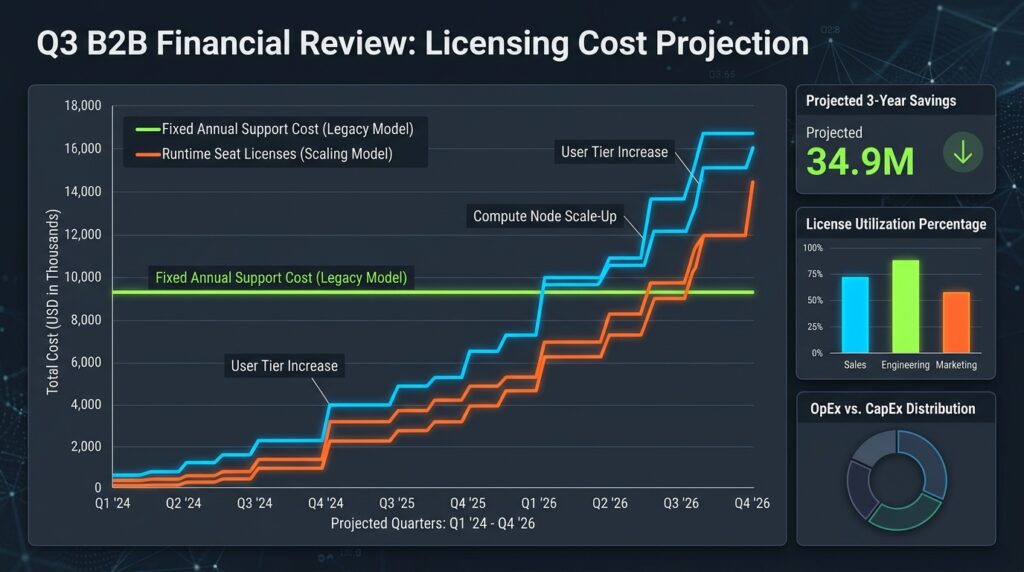
This structural cost advantage stems from the elimination of variable execution runtime fees. The annual cost calculation ($C_{\text{annual}}$) for traditional software options depends heavily on the volume of runtime agents deployed:
$$C_{\text{annual}} = (N_{\text{dev}} \times C_{\text{studio}}) + C_{\text{orchestrator}} + (N_{\text{bot}} \times C_{\text{bot}})$$
Under ElectroNeek’s commercial framework, the annual cost remains constant regardless of scaling execution volumes or process frequencies:
$$C_{\text{annual}} = C_{\text{flat\_enterprise}}$$
Editor’s Perspective: Architectural Impact
This pricing shift changes how Enterprise Architects design automated systems. With per-bot pricing models, developers are forced to combine multiple unrelated processes into a single runtime agent to optimize utilization rates and minimize licensing overhead. This practice yields overly complex, brittle code structures that present significant maintenance challenges and introduce systemic risk if a single sub-process fails.
ElectroNeek’s model enables a microservices-inspired approach. Teams can decompose workflows into dozens of single-purpose, highly decoupled software runners executing concurrently across On-Premises environments. This method enhances system isolation, simplifies maintenance, and eliminates scheduling bottlenecks.
Centralized Orchestrator: Control Plane Mechanics, On-Premises Infrastructure Governance, and RBAC
Managing enterprise automation at scale requires robust infrastructure management and precise session handling. Because GUI-focused software agents mimic human behavior, they require a fully rendered graphic environment (Active Desktop Session) rather than merely running background code. Managing thousands of simultaneous desktop sessions across On-Premises infrastructure presents unique technical challenges.
The ElectroNeek Orchestrator On-Premise control plane addresses these requirements through automated graphical session management and a granular Role-Based Access Control (RBAC) framework.
Minimum Infrastructure Requirements for On-Premises Bot Runners
To maintain stable execution performance during complex interface interactions, each virtual machine (VM) or physical workstation running an execution agent must meet these bare minimum specifications:
- Operating System: Windows 10, Windows 11, Windows Server 2019, or Windows Server 2022. The execution account must be a persistent profile equipped with local administrative privileges.
- Processor (CPU): Minimum 1.4 GHz clock speed; dual-core 1.8 GHz or higher recommended.
- Memory (RAM): Minimum 8 GB allocated capacity.
- Storage Availability: Minimum 5 GB of unallocated disk space.
- Software Dependency: Microsoft .NET Framework version 4.8 or higher installed.
- Network Configuration: Local ports 5000 through 5005 must be open for loopback communications between Studio Pro and the Bot Runner runtime. Outbound TCP port 443 must be allowed to reach the centralized orchestrator endpoints.
RDP Session Management and Headless Execution Control
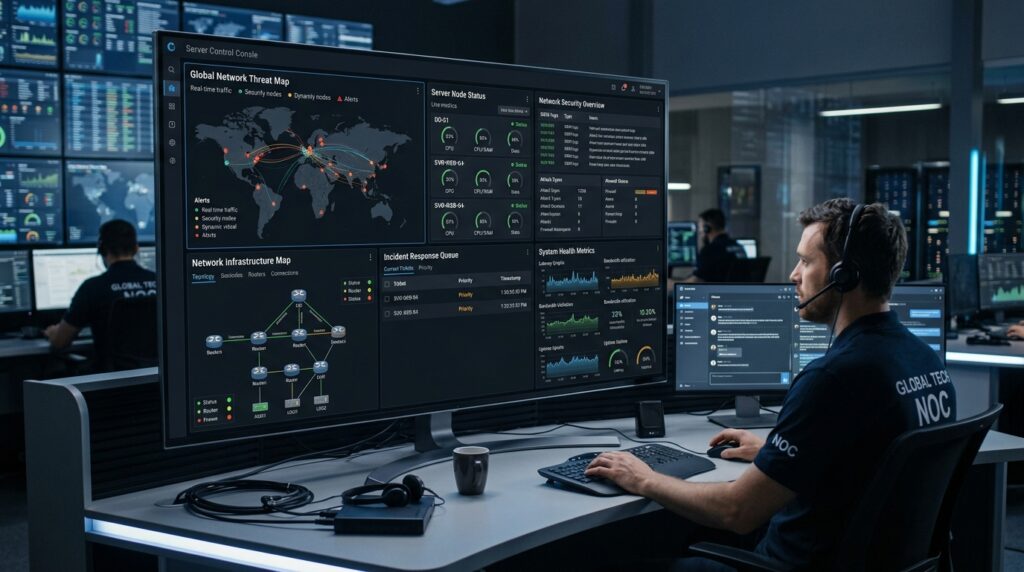
To prevent runtime failures caused by locked workstation consoles or dropped Remote Desktop Protocol (RDP) connections, ElectroNeek Orchestrator utilizes an Active RDP Session Maintenance subsystem:
- Automated Graphical Session Initialization: Upon receiving an execution trigger via an internal schedule or inbound webhook, the Orchestrator initiates a headless RDP connection to the target execution node. It securely draws credentials from the Windows Credential Manager or an encrypted internal vault, provisioning a valid desktop environment without manual administrator intervention.
- Minimized and Logged-Out Virtualization Support: The platform maintains GUI rendering inside the OS graphic buffer even when RDP windows on the host server are minimized or user accounts are completely logged off. This mechanism ensures mouse click simulations and keystroke events continue executing reliably without consuming physical display resources.
Advanced Access Management and Security Segmentation
Within On-Premises enterprise environments, strict data isolation and clear separation of duties across departments are mandatory. ElectroNeek’s Advanced Access Management implements this isolation through the logical construct of Security Groups.
Security Groups enforce explicit infrastructure boundaries: only one Orchestrator instance can be assigned to a specific Security Group, but a single Orchestrator can govern multiple independent Security Groups. A given automation workflow is strictly restricted to one Security Group, whereas Bot Runner hardware nodes can be shared across multiple groups to maximize resource utilization.
System permissions are enforced across two distinct abstraction layers:
- Portal Roles: Manages high-level tenant rights. Roles include Owner (absolute tenant authority), Admin (global platform configurations), Security Admin (dedicated information security profile managing user provisioning, security group assignments, and immutable audit logs), Member (standard access to assigned components), and Billing Contact.
- Orchestrator Roles: Manages environment-level actions. Roles include Admin (full resource control), Analyst (read-only access to performance metrics and execution error logs within their assigned security group), Developer, and Operator.
The operational boundary between Developers and Operators is enforced to prevent unauthorized alterations to production environments:
- Developer: Authorized to publish new automation routines, modify workflow configurations, toggle webhooks, assign execution target nodes, and review version histories for rollbacks. Actions are restricted to the developer’s assigned Security Group to prevent cross-departmental interference.
- Operator: Tailored for Network Operations Center (NOC) and system monitoring personnel. Operators can schedule tasks, trigger manual executions, audit runtime logs, and manage work queues. However, as an explicit security guardrail, Operators are strictly blocked from viewing output variable strings or inspecting and downloading raw workflow source files.
Multi-Tenant Architecture and Control Plane APIs
For large conglomerates governing independent business units, or Managed Service Providers (MSPs) delivering automation services, the Orchestrator provides a multi-tenant framework. Connection authorization between disparate subsystems relies on temporary Access Tokens, which carry a strict 24-hour expiration limit from the point of generation. Once established, multi-tenant boundaries ensure total data isolation: users cannot orchestrate processes or assign runtime resources across tenant boundaries, preventing data leakage or cross-entity interference.
Data exchange between edge runners and external environments is mediated via the Orchestrator REST API. When a runner completes a workflow and exports data through Studio Pro’s Output tab, the Orchestrator records the payload alongside a unique transaction identifier (Launch ID). Downstream enterprise systems can query this data by sending an authenticated HTTP GET request using a Bearer Token to the standardized data endpoint:
HTTP
GET https://api.na.electroneek.com/v1/orchestrator/launch/{Launch_ID}
Backed by an annual service uptime commitment of 99.5%, this control plane delivers the reliability required to sustain core business operations.
Operational Risks and Decision Matrix: Full ERP Modernization vs. Overlay RPA
Despite the clear cost advantages and rapid deployment speeds, adopting user interface-level automation introduces distinct operational risks. Enterprise Architects must analyze these challenges and implement clear mitigation strategies.
GUI Fragility and Reactive Maintenance Costs
The primary technical risk in GUI-level automation is its inherent vulnerability to changes in the target application’s presentation layer. When a target application modifies its layout—such as shifting button placements, altering HTML identifier tags via front-end framework updates (e.g., React or Angular), or changing third-party document structures—edge runners can lose track of target elements. This causes the automation sequence to fault and halt unexpectedly.
Real-world deployment data indicates that without rigorous change management protocols, enterprises can expend up to 40% of their annual automation budget on reactive maintenance—rewriting code blocks for runners broken by interface updates.
To address this challenge, ElectroNeek incorporates computer vision engines and self-healing selectors that leverage visual analysis to adapt when underlying application code changes. While this capability dramatically lowers exception rates, it minimizes rather than eliminates the core fragility inherent in user interface automation.
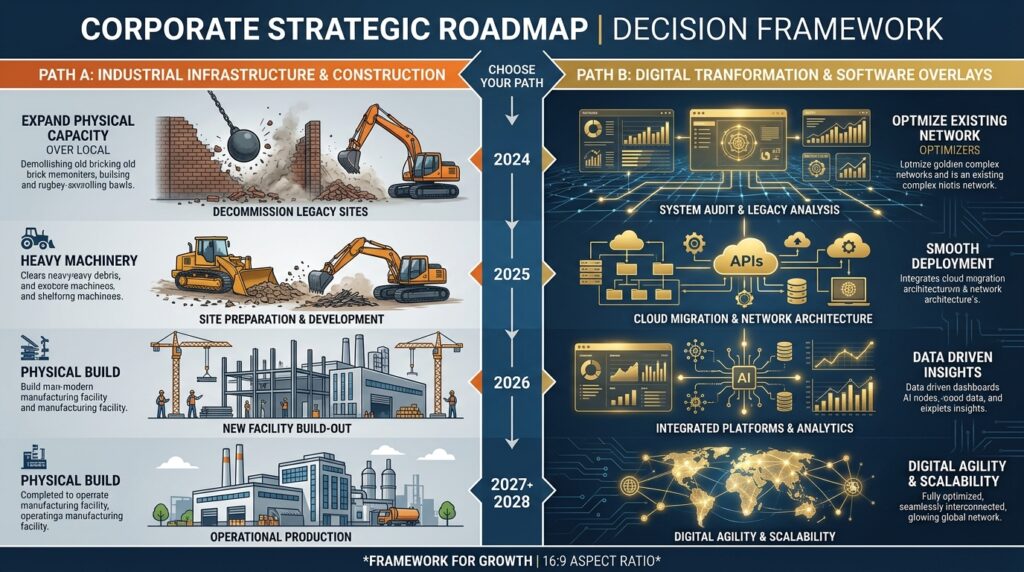
Architectural Decision Matrix: ERP Replacement vs. ElectroNeek RPA Overlay
When facing an aging legacy system, technology leadership must choose between two strategic paths: investing significant capital to replace the core ERP, or maintaining the legacy system and deploying an ElectroNeek RPA orchestration layer on top.
The matrix below outlines the architectural trade-offs between these two strategies:
| Evaluation Criteria | Comprehensive ERP Modernization | ElectroNeek RPA Layer Overlay |
| System Classification | Establishes a new System of Record, standardizing core enterprise data architectures. | Functions as a flexible System of Execution overlay, preserving existing legacy logic. |
| Capital Expenditure (CapEx) | Exceptionally high; often exceeds initial budgets by 30% to 50% due to complex technical debt. | Low and highly predictable due to flat-rate, unlimited execution licensing. |
| Time-to-Value Delivery | Requires 12 to 36 months; high risk of delays during data migration and process re-engineering. | Rapid implementation; complex workflows can achieve production readiness within weeks. |
| Operational Disruption Risk | High during cutover windows due to radical shifts in user workflows and business logic. | Negligible; software runners mirror human actions within familiar, validated interfaces. |
| Resource Allocation Requirements | Demands extensive support from global consultancies and dedicated internal domain experts. | Small internal IT teams or boutique integrators can manage development via low-code tools. |
| Long-Term System Stability | High and structurally consistent, driven by native backend API integrations. | Dependent on the visual stability of the underlying application interfaces. |
Strategic Deployment Recommendations
Based on this matrix, Enterprise Architects should apply these clear guidelines to determine the optimal approach for specific scenarios:
When to Prioritize Comprehensive ERP Modernization
- Physical Hardware and Capacity Barriers: When the physical host servers running legacy software have reached the end of their operational lifespans, lack replacement components, or utilize outdated database engines that cannot scale capacity linearly.
- Regulatory Compliance Failures: When legacy systems run on unsupported operating systems that no longer receive security patches, creating severe security vulnerabilities and jeopardizing compliance with frameworks like HIPAA, PCI-DSS, or DORA.
- Fundamental Business Model Pivot: When an enterprise completely restructures its core operating workflows, rendering the legacy system’s processes obsolete. Automating an fundamentally broken or expiring process represents inefficient resource allocation.
When to Prioritize an ElectroNeek RPA Overlay Solution
- Stable but Closed Legacy Environments: Systems like AS400 or core accounting applications often prove exceptionally stable, handling transactional processing reliably for decades. Their visual interfaces rarely change, eliminating the primary risk of GUI fragility.
- Urgent Operational Cost Optimization: When facing immediate budget constraints, organizations must automate repetitive tasks quickly to recapture 10% to 20% of staff capacity within months. ElectroNeek’s flat-rate model allows IT to scale software runners without incurring additional licensing fees.
- Interim Strategy During Modernization Phases: When an enterprise plans to replace its core ERP over a long-term horizon (3 to 5 years) but requires immediate relief from manual data entry bottlenecks. Deploying ElectroNeek as a transitional data bridge provides a cost-effective alternative to developing custom code on an application scheduled for decommissioning.
Architectural Summary and Next Steps
The ElectroNeek On-Premise Automation platform provides a pragmatic, high-ROI approach to digital transformation for enterprises managing extensive legacy technology stacks that lack native APIs. By leveraging computer vision to handle legacy system integration and using a flat-rate commercial model to eliminate variable runtime licensing overhead, the platform delivers strong operational efficiency alongside a highly predictable TCO profile.
From a holistic systems design perspective, the recommended strategy is to adopt a Hybrid Architecture. Organizations should maintain highly stable legacy assets as their secure System of Record while deploying an ElectroNeek RPA layer as a dynamic, responsive System of Execution. This dual-track strategy enables enterprises to capture immediate productivity gains with minimal upfront risk, while preserving capital to fund long-term, strategic technology modernizations down the road.
Architectural Summary and Next Steps
The ElectroNeek On-Premise Automation platform provides a pragmatic, high-ROI approach to digital transformation for enterprises managing extensive legacy technology stacks that lack native APIs. By leveraging computer vision to handle legacy system integration and using a flat-rate commercial model to eliminate variable runtime licensing overhead, the platform delivers strong operational efficiency alongside a highly predictable TCO profile. From a holistic systems design perspective, the recommended strategy is to adopt a Hybrid Architecture. Organizations should maintain highly stable legacy assets as their secure System of Record while deploying an ElectroNeek RPA layer as a dynamic, responsive System of Execution. This dual-track strategy enables enterprises to capture immediate productivity gains with minimal upfront risk, while preserving capital to fund long-term, strategic technology modernizations down the road.
To evaluate how this user-interface integration overlay compares against highly specialized hardware solutions deployed for localized processing, read our intensive Qualcomm Dragonwing AI Review. For enterprises looking to transition large-scale operations into centralized, private computing fabrics, we recommend exploring the HPE Private Cloud AI Review. If your architectural requirements center on scaling massive next-generation Mixture of Experts (MoE) models completely inside local infrastructure clusters, check out the specialized analysis in our SambaNova SN40L RDU Review. Additionally, you can contrast these solutions against historical setups via our baseline Top 5 Zanus AI Alternative manual, or reference sector-specific deployment Blueprints including Zanus AI Deployment, Zanus AI for Construction, and Zanus AI for Logistics. To stay continually aligned with high-performance digital transformation valuations, ensure you bookmark our core AI Review Zones portal today.
References
- ElectroNeek Product Documentation: AS400 Terminal Automation Capabilities
- ElectroNeek Platform Architecture: On-Premise Automation Infrastructure Requirements
- ElectroNeek Technical Documentation: Orchestrator Architecture and User Guide
- Gartner Peer Insights: ElectroNeek Platform Reviews and Ratings
- HFS Research: ElectroNeek Carves Partner-Friendly RPA Niche with Unlimited Bots
- UiPath Licensing Reference: UiPath Enterprise Software Pricing and Deployment Cost Analysis