Chapter 1: The Architectural Redesign – Breaking the Memory Wall
As the exponential scaling of Large Language Models (LLMs) exposes severe physical hardware limits, this SambaNova SN40L RDU Review evaluates how dataflow computing breaks the traditional Memory Wall.
Traditional graphics processing units (GPUs) rely on a rigid, instruction-set architecture (ISA) rooted in Von Neumann principles. In this paradigm, compute cores (such as NVIDIA’s CUDA or Tensor Cores) must continuously fetch model weights and activation data from High Bandwidth Memory (HBM), execute the matrix math, and write the intermediate states back to memory.
[ Traditional GPU Architecture: Instruction-Driven ]
  Compute Cores <====== (Continuous HBM Read/Write Bottleneck) ======> HBM
  * High energy overhead due to constant data shuffling across the bus.
  * Scaling requires complex Tensor Parallelism across multiple chips.

[ SambaNova RDU Architecture: Dataflow-Driven ]
  Data Input ===> [ PCU ] ---> [ PMU ] ---> [ PCU ] ---> [ PMU ] ===> Data Output
                     \__________ Reconfigurable Network __________/
  * Software programs the hardware layout to match the model graph.
  * Data flows pipelined through on-chip units without intermediate HBM roundtrips.
When a model’s parameters exceed the HBM capacity of a single GPU, the workload must be fragmented across multiple chips using complex Tensor Parallelism. This approach introduces massive communication latency and high energy overhead, as clusters waste cycles moving data across inter-chip networks rather than executing raw computations.
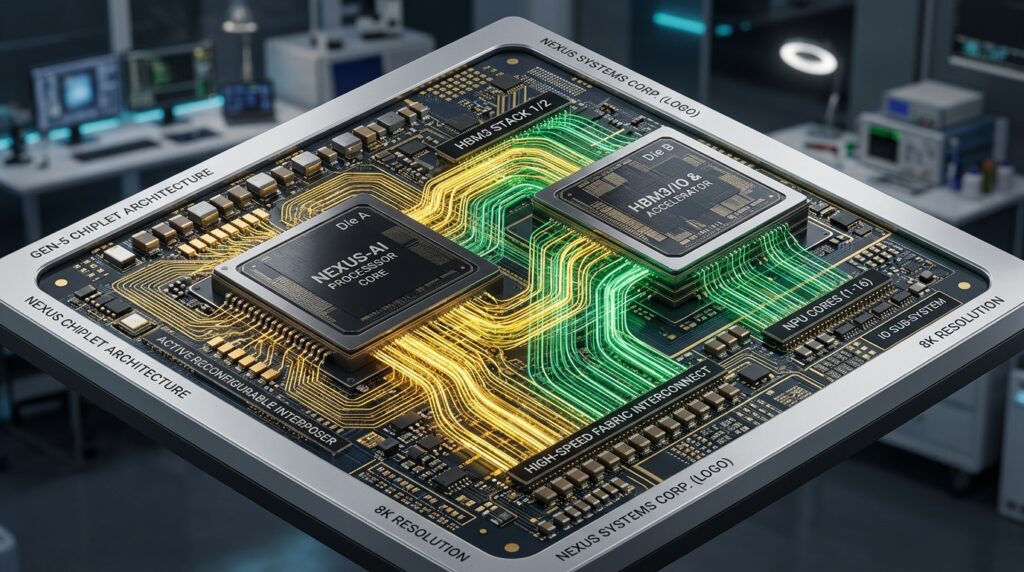
SambaNova Systems bypasses this bottleneck entirely through its Reconfigurable Dataflow Unit (RDU) architecture. Instead of processing static instructions on fixed execution units, an RDU allows the compiler to dynamically program and reshape the underlying physical hardware layout to match the model’s computation graph. Data flows continuously through a spatial pipeline on the silicon, moving directly from one operator to the next without executing intermediate roundtrips to external memory. This design significantly increases compute density while cutting down spatial power waste.
Deep-Dive Hardware Specifications: SambaNova SN40L RDU Review vs. Cutting-Edge GPU Architecture.
To understand how custom dataflow silicon competes with dominant enterprise platforms, examine the hardware configurations below:
| Technical Specification | SambaNova Cerulean SN40L RDU | SambaNova SN50 RDU | NVIDIA Hopper H200 SXM5 | NVIDIA Blackwell B200 |
| Manufacturing Process | TSMC 5nm | Next-Gen Optimized | TSMC 4N | TSMC 4NP |
| Silicon Architecture | 2.5D CoWoS Chiplet (2 RDD dies) | 5th-Gen Dataflow Architecture | Monolithic | Dual-die CoWoS |
| Physical Compute Elements | 1,040 Cores (PCUs/PMUs) | High-Density Matrix Array | 132 SMs / 16,896 CUDA Cores | 160 SMs / 20,480 CUDA Cores |
| Peak Precision Performance | 638 TFLOPS (BF16 per socket) | Enhanced Compute Density | ~989 TFLOPS (FP16) | ~2,250 TFLOPS (FP16) |
| On-Chip Memory (SRAM) | 520 MB (PMU Scratchpad) | Upgraded Buffer Stack | 50 MB (L2 Cache) | Expanded Cache Array |
| Integrated HBM Storage | 64 GB HBM3 | High-Bandwidth Aggregated | 141 GB HBM3e | 192 GB HBM3e |
| Direct Host DDR Interface | Up to 1.5 TB DDR5 | Multi-Terabyte Capacity | Not Supported | Not Supported |
The Underlying Silicon Topology
The architectural fabric of the SN40L RDU consists of a coarse-grained reconfigurable array (CGRA) linked by a high-speed, multi-directional Reconfigurable Dataflow Network (RDN). The silicon is divided into three fundamental macro-components:
- Pattern Compute Units (PCUs): These units provide decoupled, parallel execution logic. The SN40L generation incorporates hardware-level systolic arrays optimized for small-to-medium matrix math and direct bias-addition routing. It features dynamic destinations for internal data packets, allowing the chip to process irregular control logic—like tensor splitting and conditional routing—without causing execution stalls.
- Pattern Memory Units (PMUs): These units function as low-latency scratchpad buffers managed entirely by software, replacing standard hardware-controlled caches. The SN40L integrates programmable lane shuffles and bit-masking logic within the PMUs, accelerating complex data-munging operations like Fast Fourier Transforms (FFTs) and token-sorting algorithms.
- Address Generation and Coalescing Units (AGCUs): These units manage memory indexing and coordinate data flow between the on-chip PCU/PMU matrix and the external multi-tiered storage layers.
Three-Tier Memory Hierarchy
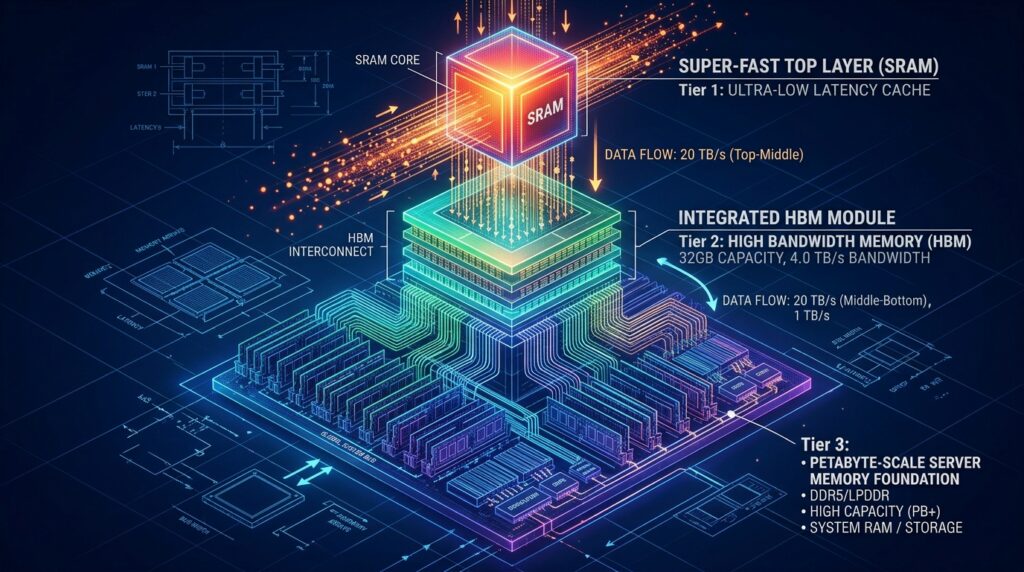
The RDU circumvents memory bottlenecks by implementing a software-defined, three-tier memory architecture. High-speed on-chip SRAM (~520 MB) operates at peak silicon frequency to store activations and intermediate pipeline tensors. Tightly coupled HBM3 (64 GB) acts as a high-bandwidth intermediate tier, holding active attention layers and the current user KV cache. Direct-attached DDR5 system memory (up to 1.5 TB per socket) serves as the high-capacity layer, storing the full parameter weight space of inactive or “cold” model experts.
       [ 520 MB On-Chip SRAM ]  --> Fast Activations & Intermediate Tensors
                 ▲
                 │ (High-Speed Spatial Pipeline)
                 ▼
        [ 64 GB Integrated HBM3 ] --> Active Attention Layers & KV Cache
                 ▲
                 │ (Direct Streaming > 1 TB/s)
                 ▼
       [ 1.5 TB Host DDR5 Memory ] --> High-Capacity Storage for Full Model Weights
During the autoregressive decoding phase of LLM inference under tight batch sizes, standard GPUs face severe computational underutilization. They are forced to stream the entire parameter footprint from HBM for every single generated token.
On the SN40L RDU, shared baseline layers are locked into HBM3, while large token-routing paths reside in DDR5. The runtime pre-fetches these weights into HBM3 at speeds exceeding 1 TB/s exactly when triggered by routing logic. This tiering allows a single system node to host massive model topologies without requiring complex tensor partitioning across multiple networked machines.
Chapter 2: Commercial Viability – Scaling MoE and Agentic Workflows
Mixture of Experts (MoE) architectures allow enterprises to scale model capacity without a linear increase in per-token compute costs. However, running dense MoE configurations like the unquantized 671-billion parameter DeepSeek-R1 requires substantial infrastructure.
To serve raw DeepSeek-R1 at scale, cloud providers typically deploy extensive GPU clusters—often requiring dozens of high-end nodes distributed across multiple server racks. This creates considerable infrastructure complexity, high power demands, and increased network latency.
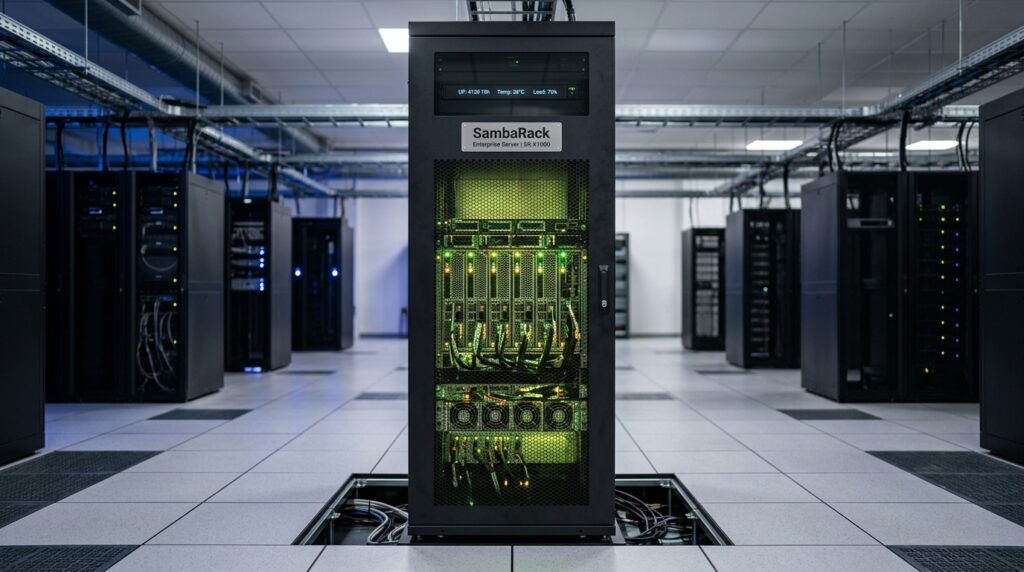
SambaNova challenges this paradigm by serving full-scale DeepSeek-R1 workloads out of a single SambaRack SN40L-16 cluster (housing 16 enterprise RDUs), achieving a sustained decoding throughput of ~198 tokens per second per user.
Enterprise Infrastructure Footprint
| Performance Metric | SambaRack SN40L-16 Cluster | Traditional Production GPU Cluster |
| Accelerated Silicon Count | 16 RDUs (SN40L) | 320 Scale-Out GPUs |
| Aggregated Memory Pool | 1 TB HBM3 + 24 TB DDR5 | ~25.6 TB HBM3e |
| DeepSeek-R1 671B Throughput | ~198 tokens/sec/user | Comparable at high batch sizes |
| Physical Deployment Profile | Single 10kW Air-Cooled Cabinet | 40 Industrial Liquid-Cooled Racks |
| Inter-Chip Interconnects | Local RDN Switches | Complex InfiniBand / RoCE Fabric |
Overcoming the MoE Token Routing Bottleneck
The efficiency of the 16-RDU cluster stems from the tight alignment between the SambaFlow compiler and the three-tier physical memory structure. During DeepSeek-R1 compilation, the model’s massive parameter footprint is hosted directly in the ultra-large pool of attached DDR5 memory. The SambaFlow compiler maps the common base layers and token routing controllers to the high-speed HBM3 tier.
When a token enters the block, the routing logic selects the corresponding expert pathways. Using software-directed pre-fetching, the system streams the required expert weights from DDR5 to HBM3 in parallel with the compute cycles of preceding layers on the PCUs. This continuous execution pipelining eliminates hardware wait states and avoids the need for complex inter-node tensor parallel communication frameworks.
Optimizing Agentic AI Workflows
This architecture is well-suited for Agentic AI deployments, which feature two primary operational characteristics:
- Extended Autoregressive Reasoning Loops: Advanced reasoning models generate large numbers of internal chain-of-thought tokens before returning a final output. High token-generation throughput is critical to maintaining a responsive user experience.
- Dynamic, Real-Time Model Switching: Enterprise multi-agent systems often orchestrate sequences of specialized models in real time—routing a prompt from a broad language parser to a structured SQL generator, a code synthesizer, and a validation agent in rapid succession.
On standard GPU infrastructures, switching execution contexts across distinct, large-scale models creates a major operational bottleneck. When model parameters exceed individual chip memory capacities, clearing one model to load another via the PCIe bus introduces noticeable latency spikes that disrupt real-time agent coordination.
SambaNova addresses this with two key mechanisms:
Microsecond Model Switching & Bundling
- Zero-Copy Architecture: The multi-terabyte memory footprint allows dozens of specialized enterprise models to sit concurrently in host-attached memory. The system switches active execution contexts within milliseconds by re-routing internal network paths, avoiding traditional model reload delays.
- Model Bundling: Multiple discrete models can run simultaneously on a single physical node using Kubernetes orchestration. Agents communicate directly within shared local memory, bypassing inter-node network calls to optimize tail latency.
To further accelerate performance, Agentic Caching retains system prompt tokens directly within on-chip SRAM and HBM pools. This reduces prefill latencies, minimizes Time to First Token (TTFT), and improves throughput during iterative agent interactions.
Additionally, enterprises can adopt a disaggregated asymmetric inference model: routing the compute-heavy Prefill phase to standard dense GPU clusters (like NVIDIA H200 or AMD MI300X) while offloading the memory-bound Decoding phase to a SambaRack cluster. This hybrid deployment model maximizes resource utilization and cost-efficiency across large-scale agent ecosystems.
Chapter 3: Software Ecosystem Challenges – Navigating the CUDA Wall
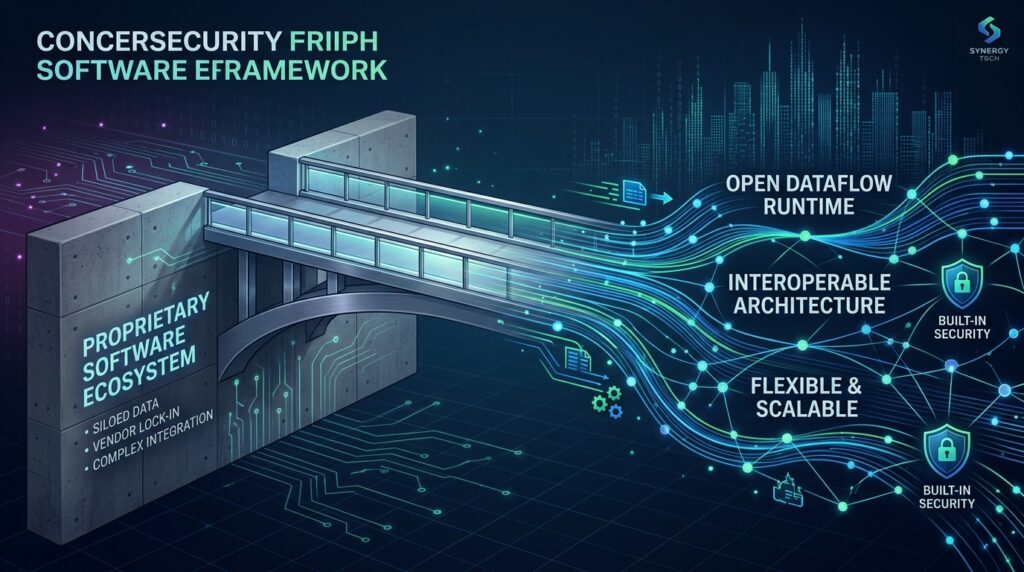
Despite its architectural advantages, alternative AI silicon faces a major market challenge: the widespread adoption of NVIDIA’s proprietary CUDA (Compute Unified Device Architecture) platform. Developed over nearly two decades, CUDA serves as the foundational translation layer for the modern open-source AI software ecosystem. Moving away from this environment introduces specific technical risks alongside unique compilation opportunities.
[ Traditional GPU Stack ]                 [ SambaNova Dataflow Stack ]
   PyTorch / HuggingFace                     PyTorch / HuggingFace
             │                                         │
     [ Triton / CUDA ]                       [ Dataflow Graph Analyzer ]
             │                                         │
   NVIDIA Core Execution                    [ Spatial Template Engine ]
                                                       │
                                             Direct RDU Silicon Mapping
Technical Risks of Moving Beyond CUDA
- Zero-Day Model Support Latency: When new open-source models drop on platforms like HuggingFace, the CUDA ecosystem can typically run them immediately using standard runtimes. On SambaNova hardware, models must first be processed through the SambaFlow compilation toolchain. If a novel architecture introduces non-standard mathematical operators or irregular control blocks not yet optimized by the compiler, developers may experience performance degradation or compilation errors until a software update is released.
- Open-Source Software Fragmentation: Popular inference and training optimization libraries—such as vLLM, SGLang, Axolotl, and Megatron-LM—are often deeply integrated with CUDA kernels. While SambaNova provides compatibility layers for runtimes like vLLM on its newer chips, running these frameworks on RDUs frequently requires custom configuration wrappers to handle specialized tasks like KV cache allocation and quantization scaling.
- Inference-Centric Optimization: Current generation SN40L and SN50 platforms are highly optimized for inference workloads. The commercial software stack focuses primarily on forward-pass execution graphs rather than backward-pass gradient computations. As a result, enterprises must typically maintain separate GPU infrastructure for deep foundational training and fine-tuning, leading to a heterogeneous hardware footprint.
Software Benefits of the SambaFlow Stack
- Automated Kernel Fusion: Optimizing memory bandwidth on standard GPUs often requires engineers to manually write custom Triton or CUDA kernels to fuse distinct mathematical operations. The SambaFlow compiler automates this translation layer, analyzing the full model topology to automatically fuse complete transformer decoder blocks into single execution configurations. This maximizes data reuse within the PMUs and PCUs without requiring manual code refactoring.
- Simplified Production Ingestion: High-level machine learning teams can write and maintain model logic using standard PyTorch syntax. The compiler handles the underlying hardware complexities—such as memory layout optimization, token routing, and compute scheduling—allowing teams to transition models to production without deep hardware-level tuning.
Chapter 4: Strategic Alignment – Target Enterprise Segments
The SambaNova Suite is not designed as a general-purpose replacement for commodity cloud GPU instances. Instead, its architectural features align with three distinct enterprise deployment profiles:
1. High-Performance Scientific Research Institutions
National laboratories and computing facilities (such as Argonne, Los Alamos, and Lawrence Livermore National Laboratories) utilize SambaNova’s architectures for specialized research workloads. Scientific AI applications frequently extend beyond standard dense Transformer architectures:
- Complex Graph Neural Networks (GNNs): Used for molecular property mapping, protein folding analysis, and fluid dynamics simulations.
- Sparse Surrogate Models: Used to accelerate climate modeling and astrophysical simulations.
Standard GPU designs are optimized for dense General Matrix Multiplications (GEMMs) and can experience memory bandwidth bottlenecks when processing highly sparse data structures. The RDU’s reconfigurable dataflow network allows the compiler to map sparse structural matrices directly onto physical silicon lanes, improving execution efficiency for complex scientific simulation tasks.
2. Sovereign AI Initiatives & Regulated Government Agencies
For national security installations, intelligence agencies, and strictly regulated sovereign entities, data privacy is a primary requirement. Processing sensitive data through multi-tenant public cloud APIs often presents unacceptable compliance risks. The SambaNova Suite supports these secure deployments via specialized on-premises capabilities:
- Air-Gapped Operational Configurations: SambaRack configurations operate completely decoupled from external network connections. Drawing a manageable 10kW to 20kW per cabinet under load, these units integrate into traditional air-cooled data center environments without requiring specialized liquid-cooling retrofits or electrical grid upgrades.
- Hardware-Level Access Control (Samba-1 CoE): The Samba-1 Composition of Experts framework enables multi-tenant cryptographic access controls mapped directly to the underlying hardware. Organizations can deploy a unified system pool where different user groups interact only with specific, authorized expert modules, preventing cross-department data exposure.
3. High-Volume Automated Enterprise Operations
Large financial institutions, telecommunications networks, and healthcare systems often run complex agent workflows that require multiple specialized models to process transactions, analyze medical records, or manage data workflows simultaneously. Deploying separate, dedicated hardware nodes for every single fine-tuned model leads to low resource utilization and high infrastructure costs.
SambaNova’s model bundling and multi-tenant memory management allow organizations to run dense agent networks within a single hardware footprint. This consolidates floor space requirements and maintains steady token generation speeds, reducing Total Cost of Ownership (TCO) compared to distributed GPU clusters for complex, enterprise-wide agent deployments.
Editor’s Perspective: Deployment Insight
When evaluating alternative AI accelerators, look past raw marketing metrics like peak TFLOPS. The real operational bottleneck for modern enterprise AI is infrastructure complexity and data movement costs.
For standard dense training runs or broad public cloud APIs, the existing CUDA ecosystem remains the practical baseline. However, for organizations deploying large-scale MoE models, real-time multi-agent workflows, or secure on-premises installations, standard GPU scaling can lead to high infrastructure overhead.
The strategy behind the SambaNova RDU architecture centers on trading complex inter-node network configurations for massive, software-routed host memory pools. For enterprises whose workloads match these specific criteria, shifting from an instruction-driven computing model to a spatial dataflow architecture can provide a significant architectural advantage.
Editor’s Perspective: Deployment Insight
When evaluating alternative AI accelerators, look past raw marketing metrics like peak TFLOPS. The real operational bottleneck for modern enterprise AI is infrastructure complexity and data movement costs. For standard dense training runs or broad public cloud APIs, the existing CUDA ecosystem remains the practical baseline. However, for organizations deploying large-scale MoE models, real-time multi-agent workflows, or secure on-premises installations, standard GPU scaling can lead to high infrastructure overhead. The strategy behind the SambaNova RDU architecture centers on trading complex inter-node network configurations for massive, software-routed host memory pools. For enterprises whose workloads match these specific criteria, shifting from an instruction-driven computing model to a spatial dataflow architecture can provide a significant architectural advantage.
To see how this spatial computing paradigm compares to other next-generation physical appliances on the market, explore our hands-on evaluation in the Qualcomm Dragonwing AI Review. If your team is interested in comparing chip-level alternatives against full-scale, enterprise-ready infrastructure suites, we highly recommend reading our deep dive on the HPE Private Cloud AI Review. Furthermore, you can review our historical baseline comparison in the Top 5 Zanus AI Alternative guide, and analyze vertical industry frameworks through our blueprints on Zanus AI Deployment strategies, Zanus AI for Construction, and Zanus AI for Logistics. To stay continuously updated on high-performance infrastructure shifts, remember to bookmark our core AI Review Zones portal.
References
- SambaNova Systems: SambaNova SN40L: Scaling the AI Memory Wall with Dataflow and Composition of Experts. https://sambanova.ai/press/sambanova-sn40l-ai-chip-composition-of-experts
- Hot Chips Symposium: SambaNova SN40L RDU Architecture Specifications and Dataflow Fabric Overview. https://hc2024.hotchips.org/
- Argonne National Laboratory: Accelerating Scientific Applications with Reconfigurable Dataflow Architectures. https://www.anl.gov/
- arXiv Technical Repository: Evaluating Emerging AI/ML Accelerators: IPU, RDU, and NVIDIA/AMD GPUs. https://arxiv.org/abs/2405.07518
- DeepSeek Architecture Docs: DeepSeek-R1 Mixture-of-Experts Scaling and Infrastructure Analysis. https://github.com/deepseek-ai/DeepSeek-R1