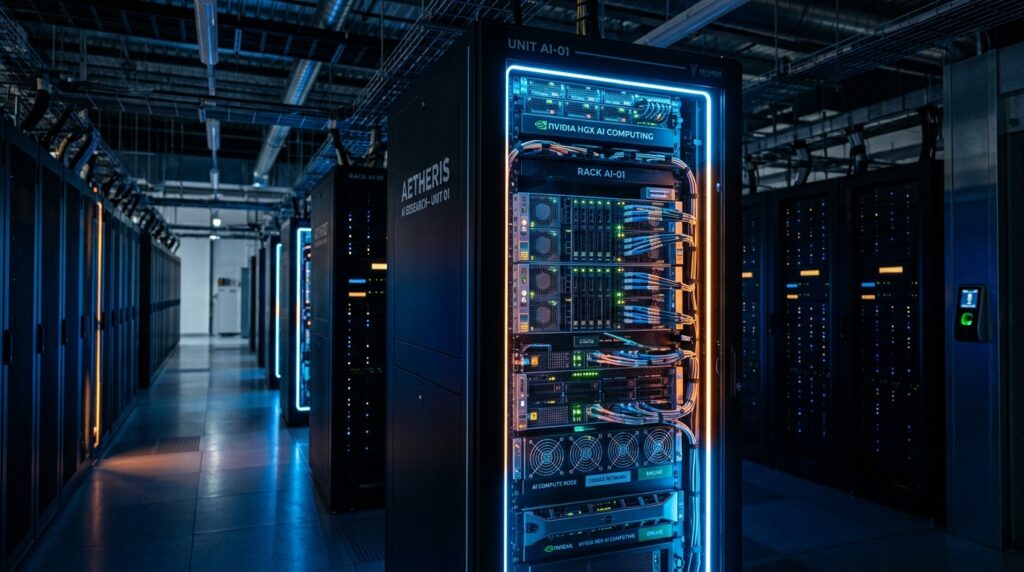
If you are searching for the Top 5 Zanus AI Alternative options, you already know that public cloud AI platforms are bleeding enterprise budgets through unpredictable token fees while simultaneously introducing severe data sovereignty risks.
By early 2026, the shift toward on-premises AI became a permanent infrastructure reality. Zanus AI captured early attention by offering a plug-and-play local server pre-loaded with the Zanus AI OS and 15 core office applications.. It completely eliminated API costs and kept data inside the corporate firewall.
But a standalone server built for office automation fails when a manufacturing plant needs real-time computer vision on the factory floor. It struggles when a multinational bank requires hybrid cloud orchestration, or when a logistics firm relies on legacy software without API access.
If your organization has outgrown standard office automation, you need infrastructure designed for your specific operational bottlenecks. Here are the five strongest alternatives to Zanus AI for enterprise deployment.
Quick Summary
- Qualcomm Dragonwing AI: The primary choice for industrial environments requiring extreme energy efficiency and real-time physical automation at the edge.
- E42.ai: The strongest software platform for departments drowning in unstructured, handwritten documents that require no-code custom AI agents.
- HPE Private Cloud AI: The default standard for highly regulated, large-scale enterprises standardizing on the NVIDIA software stack.
- SambaNova Suite: Built specifically for government and heavy industry running massive agentic workflows that choke traditional GPU architectures.
- ElectroNeek: The necessary bridge for organizations that need AI capabilities but are trapped using legacy systems without API access.
Comparison: Top 5 Zanus AI Alternative Platforms
| Platform | Best For | Core Architecture | Standout Strength |
| Qualcomm Dragonwing | Physical Edge & Manufacturing | Dedicated Cloud AI 100 Ultra Cards | Multi-modal computer vision at 150W |
| E42.ai | Finance, HR, Legal | Software-only (Hypervisor/VM agnostic) | ICR handwritten document extraction |
| HPE Private Cloud AI | Regulated Enterprise | Massive H200/Blackwell Clusters | Non-disruptive scaling via GreenLake |
| SambaNova Suite | Massive Agentic Workflows | Proprietary SN40L RDUs | Eliminates GPU memory bottlenecks |
| ElectroNeek On-Premise | Legacy Infrastructure | AI-enhanced RPA | Unlimited bots for GUI automation |
1. Qualcomm Dragonwing AI On-Prem Appliance
Zanus AI operates primarily on standard enterprise GPUs designed for text-based office tasks. Qualcomm Dragonwing attacks a completely different problem: the physical edge.
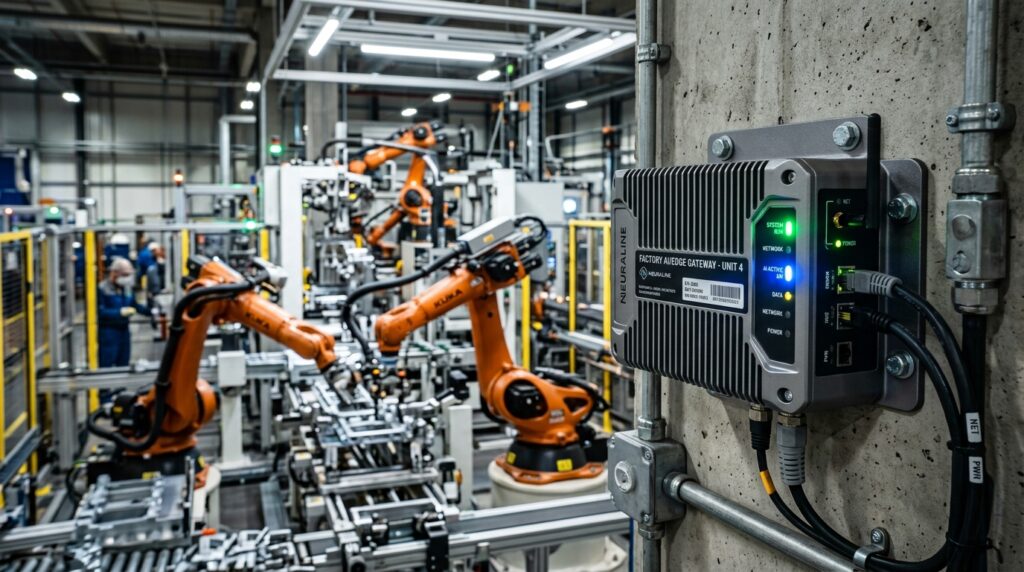
Built on Qualcomm Cloud AI accelerator cards, Dragonwing is designed to be bolted onto factory walls or placed in retail backrooms. It excels at combining massive Language Models (up to 120B parameters) with real-time computer vision. Instead of drafting emails, it watches camera feeds to identify manufacturing defects, monitors worker safety, and diagnoses physical equipment failures locally without round-tripping data to a central data center.
Best For
Industrial manufacturing, retail chains, and healthcare facilities operating at the edge.
Key Strengths
- Thermal and Power Efficiency: Dragonwing delivers roughly three times the cost-efficiency and twice the performance-per-watt of traditional cloud AI hardware, keeping facility cooling costs manageable.
- Physical Automation: Seamlessly blends computer vision with LLM reasoning, allowing the system to interpret physical video feeds and trigger maintenance protocols instantly.
- Industrial Integration: Deep partnerships with Aetina for hardened hardware and IBM watsonx ensure it plugs directly into existing industrial control systems.
Limitations
This is not an office suite. If your primary goal is automating CRM entries, generating marketing copy, or answering customer support emails, the Dragonwing hardware is entirely the wrong architecture.
Pricing
Hardware capital expenditure. Varies by deployment scale and specific accelerator configuration (e.g., Cloud AI 100 Ultra).
Editor’s Take
If your operational bottleneck involves physical movement—managing factory floors, monitoring retail inventory, or inspecting parts—Qualcomm Dragonwing provides the local processing power required to automate those tasks safely. Relying on cloud APIs for real-time video inference is financially unsustainable; moving the compute to the edge with Qualcomm solves the latency and cost equation simultaneously.
Pros & Cons
Pros:
- Exceptional performance-per-watt metrics.
- Hardware hardened for non-datacenter environments.
- Executes complex multi-modal tasks offline.
Cons:
- Requires specialized integration into physical camera systems.
- Not suited for standard corporate IT workloads.
Deployment Insight:
Putting AI in a datacenter is easy. Putting it on a vibrating factory floor with limited ventilation requires purpose-built hardware. Do not deploy standard rack servers in industrial edge environments.
2. E42.ai Cognitive Process Automation
Zanus AI forces you into its proprietary hardware ecosystem. E42.ai is a software-only Cognitive Process Automation (CPA) platform that deploys onto the virtualized infrastructure you already own.
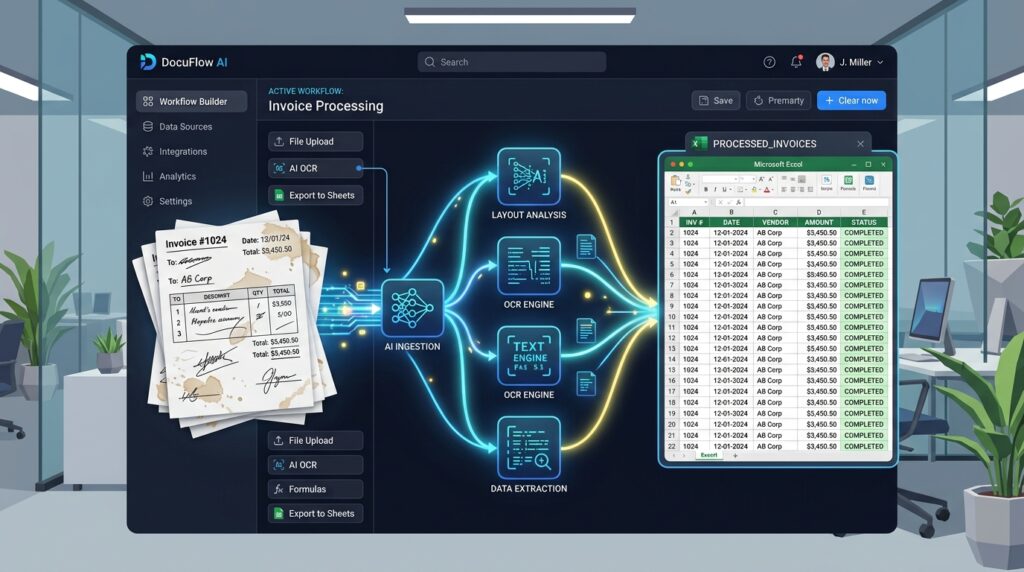
While most AI tools struggle with unstructured data, E42.ai dominates document processing. It uses a proprietary neural network for Intelligent Character Recognition (ICR) that reliably extracts data from messy, handwritten documents, tilted scans, and complex invoices with over 95% accuracy. Furthermore, it provides a no-code interface, allowing department heads to build “AI Co-workers” in days without requiring a single Python engineer.
Best For
Accounts Payable, Legal, and HR departments drowning in complex or handwritten paperwork.
Key Strengths
- No-Code AI Co-workers: Business analysts can design, train, and deploy specific operational agents using a visual interface within a week.
- Superior ICR: Resolves the primary failure point of standard OCR tools by successfully reading and routing handwritten field service notes or customer forms.
- Hardware Agnostic: Can run on cheap on-premise GPUs using LoRA and Quantization techniques, preventing expensive hardware upgrade cycles.
Limitations
Because it is purely software, your IT department remains responsible for provisioning, securing, and maintaining the underlying server hardware or virtual machines. It lacks the “plug-and-play” simplicity of an appliance.
Pricing
Custom enterprise software licensing based on platform usage, irrespective of per-user seat counts.
Editor’s Take
If your business is losing thousands of hours manually keying data from vendor invoices, handwritten forms, or legacy PDFs, E42.ai is the strongest candidate. Standard GenAI models hallucinate when reading bad scans. E42.ai’s specific ICR architecture solves the data ingestion problem before the AI attempts to reason with it.
Pros & Cons
Pros:
- Outstanding handwritten text extraction.
- Empowers non-technical staff to build workflows.
- Highly optimized to run on cheaper legacy hardware.
Cons:
- IT must manage the underlying host infrastructure.
- Overkill for companies that only handle clean, born-digital text.
Operational Impact:
AI cannot automate what it cannot read. Fixing your data ingestion pipeline with reliable ICR yields a higher ROI than buying a faster inference server.
3. HPE Private Cloud AI
A single Zanus AI server box is sufficient for a regional office. It is entirely inadequate for a multinational bank standardizing AI across 40,000 employees.
Co-engineered with NVIDIA, HPE Private Cloud AI is an enterprise-grade, turnkey infrastructure solution managed through the GreenLake hybrid cloud portal. It scales from a two-GPU developer rack up to massive multi-rack clusters housing NVIDIA Blackwell or H200 chips. It includes the complete NVIDIA AI Enterprise software stack, providing data engineers with pre-validated AI Blueprints and NIM microservices to build secure, proprietary models at massive scale.
Best For
Highly regulated enterprises (Banking, Public Sector, Telecom) requiring massive scale and unified governance.
Key Strengths
- Non-Disruptive Scaling: Start with a small development cluster and seamlessly expand to large-scale production racks without re-architecting the network.
- Industry Standard Stack: Native integration with NVIDIA AI Enterprise guarantees long-term compatibility with open-source models and frameworks.
- Unified Observability: OpsRamp AI Copilot monitors the hardware telemetry, allowing IT to predict cooling failures or network bottlenecks before they crash inference workloads.
Limitations
The financial entry point is immense. Deploying HPE infrastructure requires significant capital, highly skilled data center engineers, and robust facilities for power and cooling.
Pricing
Custom enterprise pricing. Available as a capital purchase or a consumption-based model via HPE GreenLake.
Editor’s Take
Choose HPE Private Cloud AI if shadow IT is fracturing your data governance. When different departments spin up rogue cloud instances to test AI, intellectual property leaks. Centralizing all AI workloads into a massive, privately owned, HPE-managed environment restores IT control while giving developers the NVIDIA tools they actually want to use.
Pros & Cons
Pros:
- Enterprise-wide data governance and observability.
- Guaranteed compatibility with the NVIDIA ecosystem.
- Scales to support tens of thousands of concurrent users.
Cons:
- Massive physical footprint and power requirements.
- Requires a highly sophisticated IT operations team.
Real-world Consideration:
Do not buy HPE Private Cloud AI to run basic chatbot scripts. This infrastructure exists to ingest massive corporate data lakes and fine-tune proprietary LLMs.
4. SambaNova Suite
Modern AI is shifting toward “Agentic Workflows”—where dozens of specialized AI models talk to each other to solve a complex problem. Running hundreds of concurrent models on standard GPUs (like those in a Zanus server) creates a severe memory bottleneck.
SambaNova Suite Abandons the GPU entirely. It uses proprietary Reconfigurable Dataflow Units (RDUs), specifically the SN40L. This architecture is designed for a “Composition of Experts” (CoE) framework. Because data flows differently through an RDU, SambaNova can run a massive 671B parameter model (like DeepSeek-R1) at a staggering 198 tokens per second using only 16 chips. Achieving that on traditional infrastructure would require over 300 GPUs.
Best For
Government intelligence, heavy manufacturing, and scientific research relying on agentic AI and multi-step reasoning.
Key Strengths
- Destroys the Memory Wall: Instantly swaps massive models in and out of cache without latency, making it the only viable platform for complex multi-agent workflows.
- Record-Breaking Inference Speed: Achieves speeds on 100B+ parameter models that are physically impossible on standard enterprise GPU architectures.
- Full Stack Ownership: SambaNova designs the silicon, the server chassis, and the software compiler, eliminating third-party integration failures.
Limitations
Hardware vendor lock-in. By abandoning NVIDIA GPUs, you commit entirely to the SambaNova RDU ecosystem. If a new open-source model is released, you must rely on SambaNova’s compiler to optimize it for their silicon.
Pricing
Custom enterprise hardware leasing or acquisition.
Editor’s Take
If your enterprise is attempting to chain together multiple large models to automate highly complex research, logistics, or coding tasks, standard GPUs will eventually choke on memory transfers. SambaNova Suite is the necessary upgrade when inference speed and concurrent model execution become your primary operational constraints.
Pros & Cons
Pros:
- Unrivaled speed for massive MoE models.
- Optimized for next-generation agentic workflows.
- Dramatically smaller physical footprint than GPU clusters of equal power.
Cons:
- Proprietary silicon introduces platform lock-in.
- Niche ecosystem compared to CUDA.
Editor’s Perspective:
Standard GPUs were built for graphics and adapted for AI. RDUs were built exclusively for dataflow. For agent-heavy workloads, the architectural difference translates directly to operational speed.
5. ElectroNeek On-Premise Automation
Generative AI platforms like Zanus require software APIs to connect with your systems. But what happens if your business runs on a 20-year-old AS400 terminal, a heavily customized legacy ERP, or disconnected Excel spreadsheets? Generative AI is blind to them.
ElectroNeek is an AI-enhanced Robotic Process Automation (RPA) platform. Instead of relying on APIs, it uses software bots to mimic human actions on a computer screen—clicking buttons, reading fields, and copying data.
Best For
Managed Service Providers (MSPs) and enterprises relying heavily on legacy software that lacks modern API connectivity.
Key Strengths
- Legacy GUI Automation: Bridges the gap between modern AI logic and ancient software interfaces that cannot be natively integrated.
- Unlimited Bot Licensing: Unlike legacy RPA vendors that charge per bot, ElectroNeek allows you to deploy infinite concurrent bots without scaling license fees.
- Centralized Orchestrator: Provides a single control pane to schedule tasks, manage server resources, and monitor error logs across thousands of deployed bots.
Limitations
ElectroNeek is fundamentally an RPA platform, not a reasoning engine. It executes rigid, rules-based tasks exceptionally well, but it relies on external AI integrations if it needs to make nuanced, creative decisions about unstructured data.
Pricing
Fixed platform license for the Orchestrator; zero cost for bot deployment.
Editor’s Take
Do not attempt to replace your legacy ERP just so you can use AI. The migration risk is immense. Choose ElectroNeek to automate the manual data entry across those old systems. It acts as the mechanical hands for your AI, performing the clicks and keystrokes that LLMs cannot execute.
Pros & Cons
Pros:
- Predictable, flat-rate pricing regardless of scale.
- Automates older systems without requiring custom code.
- Excellent multi-tenant management for IT service providers.
Cons:
- Not a native Generative AI reasoning platform.
- GUI automation can break if underlying software layouts change.
Deployment Insight:
AI models are brains without hands. RPA provides the hands. If your software lacks APIs, you must deploy RPA before you can deploy AI.
Buying Advice: Which Alternative Fits Your Infrastructure?
Choosing the right on-premises platform depends entirely on where your current manual processes are failing.
- If you are managing physical environments: Choose Qualcomm Dragonwing. Office AI servers cannot monitor factory safety or inspect retail inventory. You need localized computer vision hardware.
- If your bottleneck is legacy software: Choose ElectroNeek. Do not attempt a multi-million dollar software migration. Use RPA to automate the GUI interactions immediately.
- If paperwork is choking operations: Choose E42.ai. Standard AI fails at handwriting and complex table extraction. E42.ai’s specific ICR neural network will digitize your Accounts Payable faster than any generic LLM.
- If you need a unified corporate standard: Choose HPE Private Cloud AI. It provides the governance, scale, and NVIDIA integration required to satisfy the CIO, Legal, and Data Engineering teams simultaneously.
Final Verdict
For organizations attempting to scale autonomous agents and complex, multi-model workflows, SambaNova Suite represents the most significant architectural advantage on the market.
Traditional GPU infrastructure will ultimately bottleneck as enterprise AI shifts from simple Q&A chatbots toward autonomous agents that execute multi-step tasks. By moving to RDU architecture, organizations eliminate the memory constraints that plague traditional servers, securing an infrastructure foundation capable of handling the massive models of the next five years.
Final Verdict: Future-Proofing Your Private AI Infrastructure
Choosing the right on-premises platform is no longer just a technical checkbox—it is a critical business decision to secure data sovereignty and stabilize volatile enterprise budgets. If your primary goal in early 2026 is immediate cost control and automating standard workflows without data leaks, the “plug-and-play” appliance model is the obvious choice. We highly recommend reviewing your specific industry deployment strategy by checking out our comprehensive breakdown on Zanus AI Deployment to deeply understand the hardware limitations and long-term cost savings of this architectural approach.
However, a standard office setup is an evolutionary dead-end for complex multi-agent workflows or heavy computer vision. Organizations attempting to lead in large-scale edge intelligence or physical inspections should analyze our specialized guides on Zanus AI for Construction and Zanus AI for Logistics to see how localized models handle heavy physical automation. Furthermore, if your operational focus leans toward media distribution or highly regulated environments, scaling with specialized frameworks outlined in Zanus AI for Broadcasting and Zanus AI for Enterprise represents the necessary upgrade.
To explore more deeply into technical infrastructure comparisons, software optimization guides, and unbiased evaluations of the latest high-tech enterprise equipment, bookmark our dedicated AI Review Zones portal today to stay ahead of the technology curve.
References
- Zanus AI – The Rise of Sovereign Enterprise Intelligence – https://zanusai.com
- Qualcomm – Qualcomm Launches On-Prem AI Appliance Solution and Inference Suite – https://www.qualcomm.com
- E42.ai – AI-Led Cognitive Process Automation for Enterprises – https://e42.ai
- Hewlett Packard Enterprise – HPE Private Cloud AI – https://developer.hpe.com
- BusinessWire – SambaNova Delivers Generative AI Capabilities to the Enterprise – https://www.businesswire.com
- ElectroNeek – On-Premise Automation – https://electroneek.com