Editorial DNA & Quick Summary
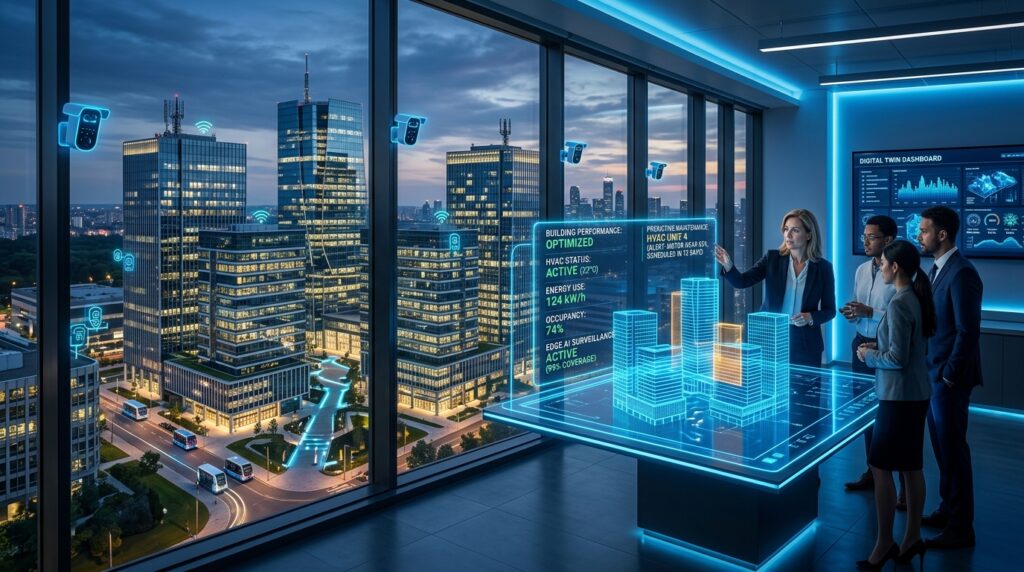
The global commercial real estate (CRE) market in 2026 is facing an aggressive filtering process. Property owners are no longer swayed by vague promises of “digital transformation” or bandwidth-heavy cloud platforms. Instead, intense pressure to slash operational expenses (OpEx) and meet stringent sustainability standards (ESG) has pushed Edge AI from an experimental tech choice to a mandatory architecture for Grade-A assets.
When data is processed directly on-premises rather than routed to centralized cloud servers, smart buildings unlock three core advantages: sub-millisecond response times, uninterrupted operations during global internet outages, and absolute data privacy for high-value tenants.
If your goal is to cut energy costs, automate predictive maintenance, or upgrade physical security to a proactive standard, this guide analyzes the five most advanced Edge AI tools leading the PropTech revolution in 2026.
How We Selected These Edge AI Platforms
Rather than ranking products based on marketing claims, we evaluated each platform using the same enterprise-focused framework.
Our assessment considered:
- AI model maturity and detection accuracy.
- Ease of deployment into existing building infrastructure.
- Integration with BAS, BMS, and physical security systems.
- Cybersecurity architecture and data privacy.
- Scalability across multiple commercial assets.
- Long-term operational costs (OpEx) and ROI.
- Vendor ecosystem maturity and enterprise support.
- Real-world suitability for commercial real estate operations.
Our recommendations focus on practical operational outcomes rather than feature lists alone.
Smart Building Edge AI Solutions: 2026 Comparison
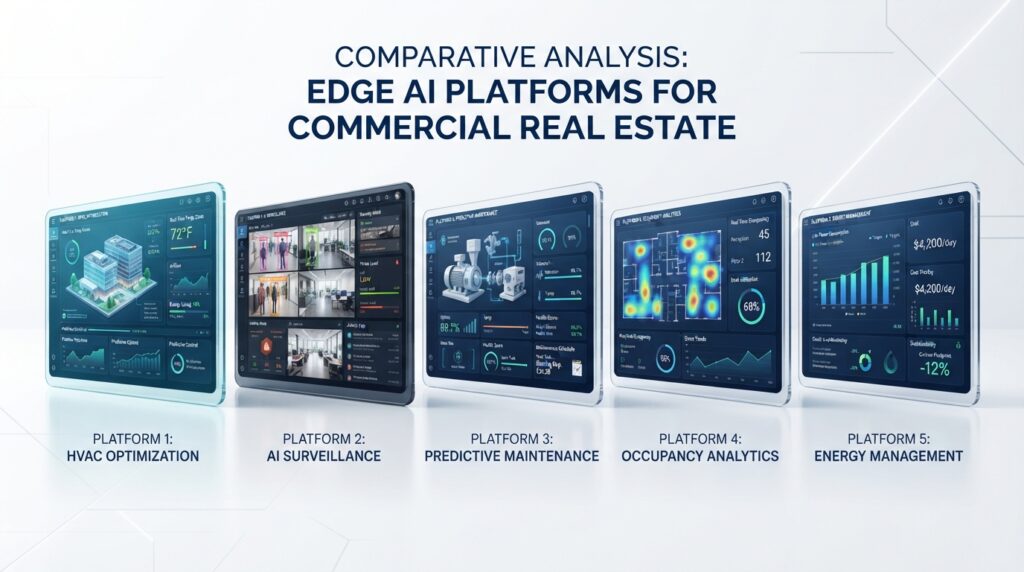
| Solution | Best For | Standout Feature | Deployment | Learning Curve | Pricing | Free Trial |
| Scylla AI | Enterprise Security & SOC Teams | Eliminates 99.95% of false alarms; top-ranked on COCO dataset. | On-premises Edge Appliance (Asteria) | Low (Integrates with existing VMS) | Custom Enterprise Pricing | Available upon request |
| Proptech.AI Edge.AI | Premium Commercial Access Control | Split-hardware architecture isolating physical network relays. | Decentralized Edge Readers & Secure Core | Very Low (Appless enrollment) | Custom per-door licensing | No (Requires hardware) |
| AutomataNexus | HVAC & Heavy Electro-Mechanical Systems | Sobek time-series model library running on dedicated NPUs. | Hardware Controller (Raspberry Pi 5 + Hailo NPU) | Moderate (Requires technical setup) | Tiered by Node/Sensors | 30-Day Sandbox |
| BrainBox AI | Automated Energy Optimization | Physics-Informed Neural Networks (PINNs) driving autonomous HVAC adjustments. | Edge Gateway via BACnet/IP and Haystack | Low (Autonomous operation) | Performance-based / Subscription | Available via pilot program |
| Schneider Electric / JCI OpenBlue | Unified iBMS & Zero-Trust IT/OT Convergence | Airwall HIP-based cloaking that hides building automation networks. | Integrated Edge Bridge (OpenBlue/EcoStruxure) | High (Requires system integrator) | Enterprise Contract | No |
Editor’s Choice
🏆 Best Overall: BrainBox AI
Best for commercial property owners focused on maximizing energy efficiency and long-term operational savings.
🛡 Best Security Platform: Scylla AI
Ideal for organizations prioritizing proactive video analytics and physical security.
🏢 Best Enterprise Platform: Schneider Electric EcoStruxure / Johnson Controls OpenBlue
Recommended for large multi-building portfolios requiring centralized governance and enterprise-scale integration.
⚙️ Best Predictive Maintenance: AutomataNexus
Best suited for organizations operating mission-critical HVAC and mechanical infrastructure.
Platform Scorecard
| Platform | Deployment | Security | ROI | Scalability | Overall |
|---|---|---|---|---|---|
| BrainBox AI | ⭐⭐⭐⭐⭐ | ⭐⭐⭐⭐☆ | ⭐⭐⭐⭐⭐ | ⭐⭐⭐⭐☆ | 9.8/10 |
| Scylla AI | ⭐⭐⭐⭐☆ | ⭐⭐⭐⭐⭐ | ⭐⭐⭐⭐☆ | ⭐⭐⭐⭐☆ | 9.6/10 |
| Proptech.AI Edge.AI | ⭐⭐⭐⭐☆ | ⭐⭐⭐⭐⭐ | ⭐⭐⭐⭐☆ | ⭐⭐⭐⭐☆ | 9.5/10 |
| AutomataNexus | ⭐⭐⭐⭐☆ | ⭐⭐⭐⭐☆ | ⭐⭐⭐⭐⭐ | ⭐⭐⭐⭐☆ | 9.6/10 |
| EcoStruxure / OpenBlue | ⭐⭐⭐⭐☆ | ⭐⭐⭐⭐⭐ | ⭐⭐⭐⭐⭐ | ⭐⭐⭐⭐⭐ | 9.8/10 |
Detailed Reviews: Top 5 Edge AI Tools for 2026
1. Scylla AI: Active Edge CCTV Analytics for Proactive Security
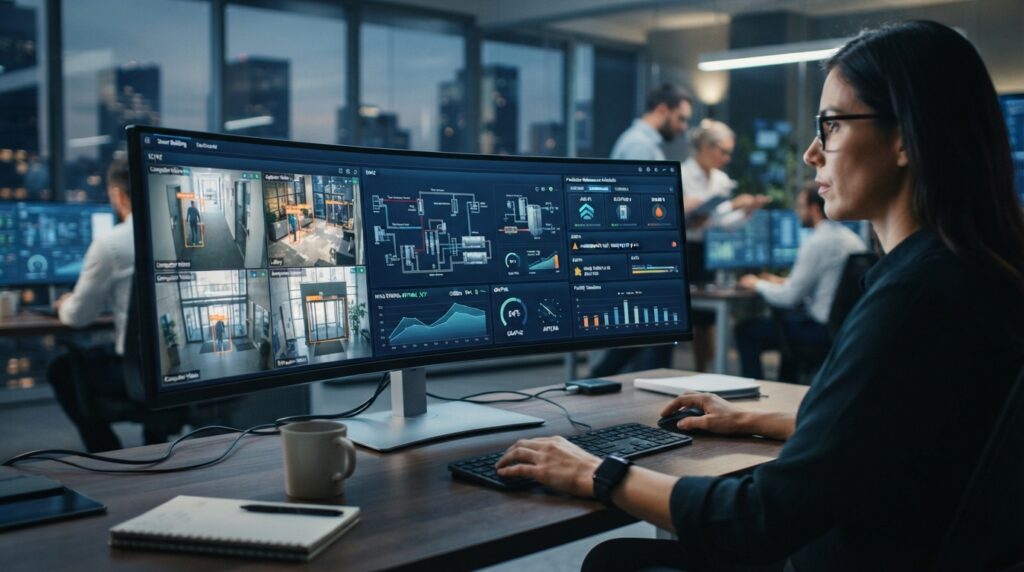
Traditional building surveillance operates reactively—security teams extract footage only after an incident has occurred. Scylla AI, driven by its smart edge appliance Scylla Asteria, shifts video monitoring into a real-time, preventative framework. The system processes RTSP, RTMP, or HTTP streams locally, keeping sensitive visual data on-premises and eliminating cloud bandwidth costs.
- The Problem It Solves: Eliminates the “alarm fatigue” that plagues security operations centers (SOCs) due to false alerts triggered by shadows, wind, or animals.
- Key Strengths: Scylla’s computer vision models rank at the top of the global COCO benchmark. The system filters out up to 99.95% of false alarms. It accurately detects military-grade firearms from up to 100 meters away on 8K cameras, manages perimeter intrusion at an incredibly low pixel density (15 pixels/meter for humans), and flags anomalous behaviors like slips, falls, or early-stage smoke plumes.
- Hardware Architecture: The Asteria M version features 4 Gigabit Ethernet ports, isolated CAN 2.0, and onboard physical I/O alarm channels, allowing it to trip local sirens or lockdown access gates instantly without waiting for a cloud response.
- Limitations: While highly accurate, performance is heavily dependent on camera lens quality and optimal lighting conditions at the edge boundary.
Editor’s Take: If your primary objective is to harden physical security while controlling payroll costs at your command center, then Scylla AI is the most reliable choice because it turns existing legacy cameras into smart, proactive sensors without requiring a rip-and-replace strategy.
2. Proptech.AI Edge.AI: Secure Biometric Access and Spatial Density Analytics
Developed by Facelabs Ltd., Edge.AI addresses a severe vulnerability in traditional access control: external wall-mounted readers being physically tampered with to expose internal local area networks (LANs).
- The Problem It Solves: Eliminates physical network vulnerability at access points while optimizing building space utilizing real-time tenant flow data.
- Key Strengths: Features a unique split-hardware architecture. The external door reader contains only the stereoscopic IR & RGB cameras and raw sensors. All critical network relays, physical lock controls, and Wiegand/OSDP channels are housed safely inside the building’s secure perimeter. It uses 3D liveness detection to block spoofing attempts (masks, digital screens) with 99.9% accuracy and supports appless self-enrollment via dynamic QR codes synced directly to Outlook or Google Calendar.
- Spatial Intelligence: The system generates tokenized, anonymous heatmaps of tenant foot traffic through turnstiles and elevators, helping management optimize janitorial schedules and space utilization.
- Limitations: Requires precise physical alignment of the dual-camera setup during installation to maintain optimal facial recognition biometrics.
Editor’s Take: If you manage Grade-A commercial spaces with high tenant turnover and strict data privacy requirements (such as GDPR or BIPA), then Edge.AI is the standard to adopt because it strips personal identifiable information (PII) away from the physical edge device entirely.
3. AutomataNexus: Predictive Maintenance and Electro-Mechanical Diagnostics
Heating, ventilation, and air conditioning (HVAC) systems represent the single largest energy drain and maintenance expense in commercial properties. AutomataNexus moves deep-learning diagnostic models out of the cloud and directly onto controllers inside the mechanical room.
- The Problem It Solves: Replaces inefficient calendar-based maintenance or costly reactive fixes with high-frequency telemetry forecasting.
- Key Strengths: Built on a secure, deterministic Rust operating system, the NexusEdge Controller pairs a Raspberry Pi 5 with a dedicated Hailo-8 (26 TOPS) or Hailo-10H (40 TOPS) neural processing unit (NPU). It deploys the Sobek Model Library—48 neural network architectures (LSTM, GRU, TCN) designed specifically for time-series sensor data. The edge device reads vibration data, oil temperature, and inrush currents from up to 256 physical I/O channels, predicting chiller or cooling tower failures 3 to 6 weeks before they happen.
- Fail-Safe Design: A dedicated hardware daemon named Talos runs 42 deterministic safety algorithms. The AI can only recommend optimizations; physical control limits are locked down to prevent catastrophic software errors.
- Limitations: Setup requires a highly structured onboarding phase to map physical sensor placement to the specific parameters of your mechanical plants.
Editor’s Take: If an unexpected central chiller failure would cause catastrophic operational disruptions for your high-value tenants, then AutomataNexus is the safest investment because it isolates predictive analytics from internet outages.
4. BrainBox AI: Autonomous Energy Optimization via PINNs
Most Building Management Systems (BMS) rely on static, scheduled programming that cannot adapt to real-time weather changes or interior occupant density. BrainBox AI’s AI Control—winner of the E+E Leader Judges’ Choice Award 2026—overhauls this workflow autonomously without replacing existing mechanical infrastructure.
- The Problem It Solves: Cuts runaway energy consumption caused by over-cooling or heating empty thermal zones.
- Key Strengths: Connects to the BAS network via BACnet IP and relies on the industry-standard Project Haystack naming convention to automatically discover and map data points. Its engine uses Physics-Informed Neural Networks (PINNs) and Neural ODEs, meaning it builds a thermodynamic digital twin of the building using 10x less data than standard deep learning. It processes 134 GB of data per minute, issuing optimized control commands to VAV boxes every 5 minutes.
- Virtual Thermal Storage: The tool tracks real-time marginal carbon emissions from WattTime, sub-cooling the building’s concrete mass when grid power is clean and cheap, and letting it float during dirty, high-cost peak hours.
- Limitations: Achieving maximum ROI requires a fully functional, digital BAS; buildings running on legacy pneumatic controls cannot support this software.
Editor’s Take: If your asset portfolio is facing immediate financial penalties under local carbon emission laws, then BrainBox AI offers the fastest path to compliance because it consistently reduces HVAC utility costs by up to 25% within months of deployment.
5. Schneider Electric EcoStruxure & Johnson Controls OpenBlue Edge: Unified iBMS and Zero-Trust Edge Security
The separation of security, fire safety, access control, and energy management leaves major operational gaps and cybersecurity vulnerabilities. These enterprise platforms act as the master integration layer unifying operational technology (OT) with traditional corporate IT infrastructure.
- The Problem It Solves: Eliminates siloed operations while closing the massive cybersecurity gaps present in exposed IoT edge devices.
- Key Strengths: Utilizes physical gateways like the OpenBlue Bridge (OBB) to natively translate older industrial protocols (Modbus, BACnet, LonWorks) into modern GraphQL APIs. It embeds Airwall cloaking security based on the Host Identity Protocol (HIP). This creates a virtual air-gap, making the entire building automation infrastructure completely invisible to unauthorized hackers scanning the network.
- Microgrid Integration: Integrates with EcoStruxure Microgrid Advisor, enabling the asset to act as a Distributed Energy Resource (DER) that dynamically coordinates rooftop solar, EV charging docks, and battery storage (BESS) to sell power back to the public utility grid during peak pricing windows.
- Limitations: Highly complex deployment architecture that demands specialized system integrators and substantial upfront CapEx.
Editor’s Take: If you are overseeing a multi-tower commercial development or a sprawling campus asset requiring centralized governance, then this unified enterprise layer is non-negotiable because it provides the scalability and military-grade encryption required by Fortune 500 tenants.
Which Edge AI Platform Should You Choose?
Choose BrainBox AI if reducing HVAC energy costs is your highest priority.
Choose Scylla AI if physical security and real-time video analytics are your primary concern.
Choose Proptech.AI Edge.AI if secure biometric access control and tenant privacy are critical.
Choose AutomataNexus if predictive maintenance for HVAC and mechanical assets delivers the greatest operational value.
Choose EcoStruxure / OpenBlue if you require enterprise-wide integration across multiple buildings.
Financial Analysis: Driving Net Operating Income (NOI) and Asset Valuation
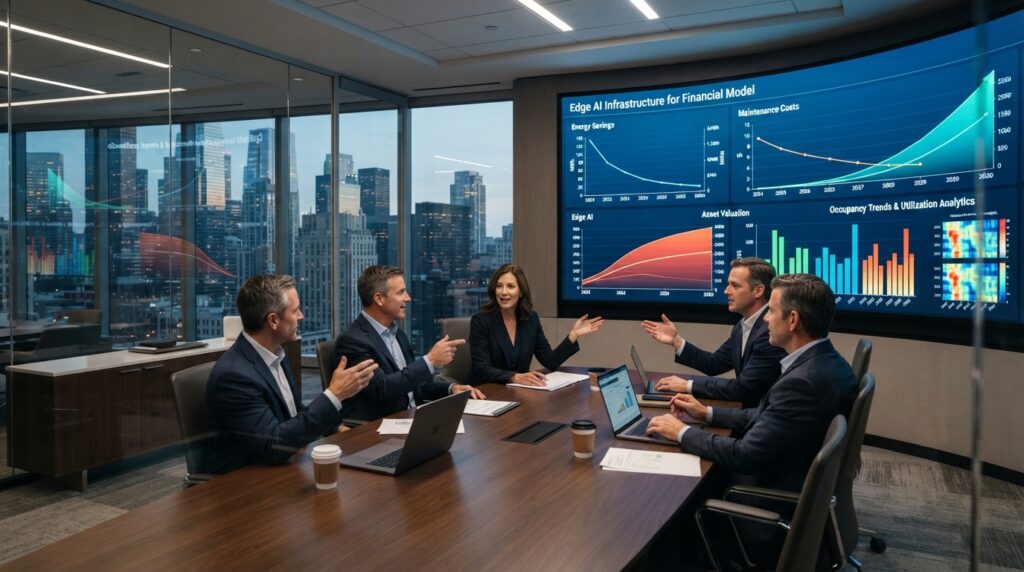
Investing in Edge AI platforms is a financial strategy designed to directly adjust the capitalization model of commercial real estate. In asset valuation, property value ($V$) is determined by Net Operating Income ($NOI$) and the market capitalization rate ($r$):
$$V = \frac{NOI}{r}$$
Net Operating Income is calculated as the difference between Gross Operating Revenue ($R_{\text{gross}}$) and Operational Expenses ($OpEx$):
$$NOI = R_{\text{gross}} – OpEx$$
By deploying edge intelligence, property managers impact both sides of the ledger: drastically lowering OpEx while protecting or increasing rental premiums ($R_{\text{gross}}$). The net movement ($\Delta NOI$) is modeled as:
$$\Delta NOI = \Delta R_{\text{gross}} – (\Delta O_{\text{energy}} + \Delta O_{\text{maintenance}} + \Delta O_{\text{security}} + \Delta O_{\text{compliance}})$$
                           +------------------------+
                           |   Edge AI Integration  |
                           +-----------+------------+
                                       |
                   +-------------------+-------------------+
                   |                                       |
                   v                                       v
      [Boost Revenue R_gross]                    [Slash OpEx Costs]
  - Premium Smart Building Status             - HVAC Energy Cuts (Delta O_energy)
  - Higher Quality Tenant Retention           - Less Emergency Repairs (Delta O_maint)
  - Spatial Optimization Insights             - Zero False Alarm Fees (Delta O_security)
                                              - Avoid Emission Fines (Delta O_compl)
                   |                                       |
                   +-------------------+-------------------+
                                       |
                                       v
                       +---------------+---------------+
                       |   Elevated Net Income (NOI)   |
                       +---------------+---------------+
                                       |
                                       v
                       +---------------+---------------+
                       |    Asset Value Appreciation   |
                       |          V = NOI / r          |
                       +-------------------------------+
Quantifying the Cost Reductions
- Utility Mitigation ($\Delta O_{\text{energy}}$): Autonomous balancing from BrainBox AI cuts waste by 15% to 25%, directly lowering the asset’s largest single utility bill.
- Predictive Maintenance Savings ($\Delta O_{\text{maintenance}}$): Shifting from reactive mechanical failure to early fault identification via AutomataNexus eliminates emergency weekend technician call-out rates. Operating machinery in peak condition also stretches equipment lifespan by up to 50%, deferring heavy capital replacement expenditures (CapEx).
- Security Overhead Reduction ($\Delta O_{\text{security}}$): With Scylla AI filtering out 99.95% of false alarms, command centers avoid local city fines for false dispatches and reduce guard patrol labor overhead.
Who Should Avoid Edge AI?
Although Edge AI delivers substantial operational benefits, it is not the ideal investment for every property owner.
Traditional management approaches may remain more appropriate if:
- Your portfolio consists of only one or two small buildings.
- Existing building systems are almost entirely manual.
- There is no Building Management System (BMS) or BAS available for integration.
- Budget constraints prevent infrastructure modernization.
- Your organization lacks technical resources to support Edge AI deployment.
In these situations, lightweight cloud analytics or targeted building automation upgrades may provide a more practical return on investment.
Real-World Valuation Impact Scenario
Consider a Class-A commercial high-rise operating in a market with a standard cap rate ($r$) of 6% (0.06).
Following a coordinated implementation of edge solutions, the asset documents the following annual operational cost reductions:
- Annual HVAC Energy Savings: $60,000
- Emergency Mechanical Repair Mitigation: $30,000
- SOC Security Personnel & Compliance Optimization: $10,000
Total annual operational savings achieved ($\Delta OpEx$):
$$\Delta OpEx = \$60,000 + \$30,000 + \$10,000 = \$100,000$$
Assuming gross rental revenues remain steady, this exact reduction in operational costs delivers a dollar-for-dollar increase to the asset’s Net Operating Income ($\Delta NOI = \$100,000$). The subsequent growth in total asset valuation ($\Delta V$) is calculated as follows:
$$\Delta V = \frac{\$100,000}{0.06} = \$1,666,667$$
Without replacing a single multimillion-dollar physical chiller or investing in structural renovations, software-driven edge intelligence adds over $1.66 million in capitalized valuation to the property. This economic reality is why institutional funds in 2026 view Edge AI as a high-yield operational mandate.
Frequently Asked Questions
What is the biggest advantage of Edge AI in commercial real estate?
Edge AI processes data locally, reducing latency while improving privacy, reliability, and operational resilience.
Can existing buildings deploy Edge AI?
Yes. Many platforms integrate directly with existing CCTV cameras, BAS, BACnet, or Modbus infrastructure without requiring a complete replacement.
How quickly can Edge AI generate ROI?
Many commercial buildings recover implementation costs through energy savings, predictive maintenance, and operational efficiencies within one to three years, depending on portfolio size.
Is Edge AI more secure than cloud AI?
Generally, yes. Local processing significantly reduces internet exposure while allowing sensitive operational data to remain on-premises.
Editorial Verdict
Edge AI is no longer an experimental technology reserved for innovation labs.
For commercial real estate owners, it has become a practical operational strategy capable of improving security, reducing maintenance costs, optimizing energy consumption, and increasing long-term asset value.
The most successful implementations are not necessarily those with the most advanced AI models—they are the ones that solve the right operational problem while integrating seamlessly with existing building infrastructure.
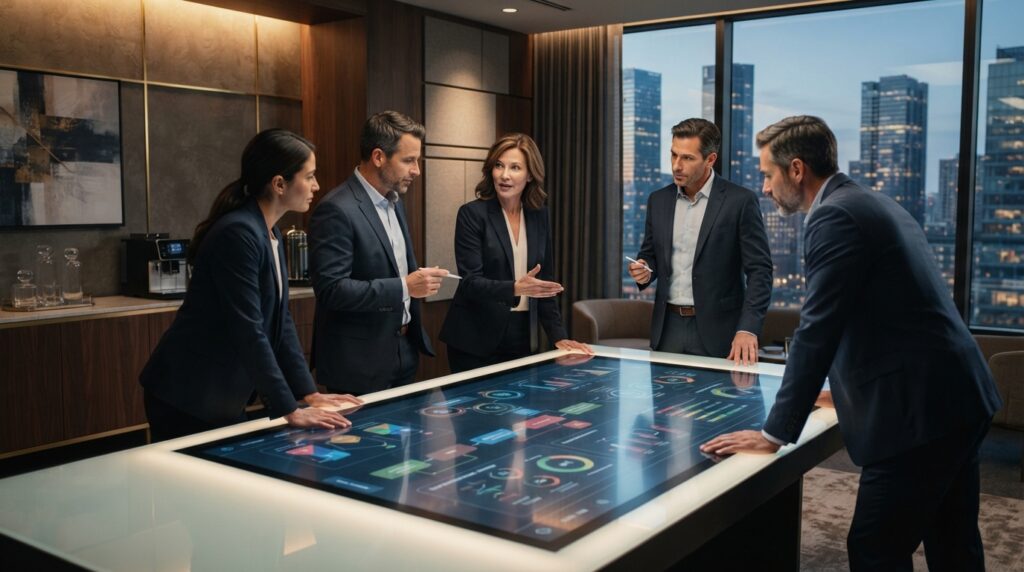
Final Recommendation: Next Steps for Property Decision Makers
- Choose BrainBox AI if your absolute priority is cutting energy utility bills this quarter without rewriting your entire mechanical operations handbook.
- Choose Proptech.AI Edge.AI if you are onboarding a premium anchor tenant demanding strict physical security, biometric convenience, and ironclad data privacy boundaries.
- Choose Schneider Electric EcoStruxure / JCI OpenBlue Edge if you are designing a new development or unifying a fragmented portfolio under a single, cyber-secure dashboard.
Your Next Step: Do not execute a portfolio-wide rollout immediately. Instead, request a Proof of Concept (PoC) from your selected vendor targeted at a single, isolated floor or mechanical zone. Prior to installation, mandate a comprehensive audit of your property’s sensor network and historical baseline data; even the most sophisticated Edge AI engines will fail if fed corrupt data from uncalibrated field instruments. Prove the ROI locally, then scale across the asset to capture maximum valuation.
Related Guides
If you’re exploring AI technologies for commercial real estate, these guides may also be useful:
- Best Private AI Platforms for Enterprises
- Air-Gapped AI for Property Management
- AI Appliance vs. AI Server
- What Is Private AI?
- Cloud AI vs. On-Premises AI
Commercial Real Estate Analytics: WattTime Carbon Emission Tracking Data
Smart Building Open Standards: Project Haystack Naming Convention Guide
Cybersecurity Defense Protocols: NIST Cybersecurity Framework Official Documentation