
Editor’s Take: If your growth goals are trapped in a six-month developer backlog, Alli AI is one of the strongest enterprise execution engines available today. By using a single JavaScript snippet to deploy real-time schema, on-page fixes, and pre-rendered static HTML directly to AI bots, it converts months of technical SEO roadmaps into direct actions within minutes.
Quick Summary
| Metric / Feature | Specification / Details |
| Primary Intent | Single Product Review (Enterprise SEO & AEO Automation) |
| Best For | Multi-site agencies, enterprise marketing teams, e-commerce, and headless stacks blocked by developer queues |
| Deployment Speed | Under 15 minutes (Universal 1-line JS snippet or CDN edge integration) |
| Standout Feature | AI Search Visibility Engine: Edge pre-rendering static HTML for 50+ AI crawler bots (GPTBot, ClaudeBot, PerplexityBot) |
| Pricing Model | Tiered monthly/annual subscriptions starting at $249/mo (Business) up to custom Enterprise tiers |
| Editorial Score | 4.7 / 5.0 (Editor’s Choice for Technical SEO Execution Efficiency) |
Overview: The Shift from Traditional SEO to AI Search Optimization (AEO/GEO)
When evaluating an independent Alli AI review and enterprise search infrastructure, enterprise search optimization faces a massive industry shift. The traditional SEO playbook—relying on manual keyword placement, static meta tag updates, and quarterly audits for standard Google desktop and mobile SERPs—is no longer enough to secure market share.
Modern growth leaders must optimize for Generative Engine Optimization (GEO) and Answer Engine Optimization (AEO). Generative AI frameworks—including Google AI Overviews, ChatGPT Search, Perplexity, Claude, and DeepSeek—now synthesize and cite structured web entities directly within AI-generated responses.
  Traditional SEO Request              Modern AI Crawling (AEO / GEO)
 ┌───────────────────────┐            ┌───────────────────────────────┐
 │ Human / Standard Bot  │            │  AI Bot (GPTBot, ClaudeBot)   │
 └───────────┬───────────┘            └───────────────┬───────────────┘
             │                                        │
             ▼                                        ▼
 ┌───────────────────────┐            ┌───────────────────────────────┐
 │ Client-side JS Loaded │            │ Client-Side JS Execution SKIP │
 └───────────┬───────────┘            └───────────────┬───────────────┘
             │                                        │
             ▼                                        ▼
 ┌───────────────────────┐            ┌───────────────────────────────┐
 │ Dynamic DOM Execution │            │ ❌ Blanks / Incomplete Markup  │
 └───────────────────────┘            └───────────────────────────────┘
                                                      │
                                                      ▼ (With Alli AI Edge Engine)
                                      ┌───────────────────────────────┐
                                      │ ✅ Instant Pre-rendered HTML  │
                                      └───────────────────────────────┘
This creates a serious operational bottleneck: engineering latency.
In complex corporate environments, basic technical recommendations—such as updating JSON-LD schema markup, modifying heading hierarchies, fixing broken internal links, or adding canonical tags—frequently languish in developer backlogs for six months or longer.
Worse yet, standard client-side JavaScript applications often render blank pages to major AI crawlers like GPTBot, ClaudeBot, and PerplexityBot because these bots skip client-side execution during content discovery.
Alli AI directly removes this friction. Operating via a single lightweight JavaScript snippet, the platform executes live code and content modifications directly at the browser and Content Delivery Network (CDN) edge layer without touching your backend CMS source code.
Detailed Capabilities Evaluation
                    ┌──────────────────────────────────┐
                    │      Alli AI Dual-Engine         │
                    └────────────────┬─────────────────┘
                                     │
            ┌────────────────────────┴────────────────────────┐
            ▼                                                 ▼
┌──────────────────────────────┐                ┌──────────────────────────────┐
│    Client-Side DOM Engine    │                │   Edge Pre-Rendering Engine  │
├──────────────────────────────┤                ├──────────────────────────────┤
│ • Dynamic Heading Updates    │                │ • 50+ AI Bot Detection       │
│ • Visual On-Page SEO Editor  │                │ • Fully Synthesized HTML     │
│ • Live Schema Injection      │                │ • Sub-48hr Indexing Pipeline │
└──────────────────────────────┘                └──────────────────────────────┘
1. Architectural Setup & JS Engine
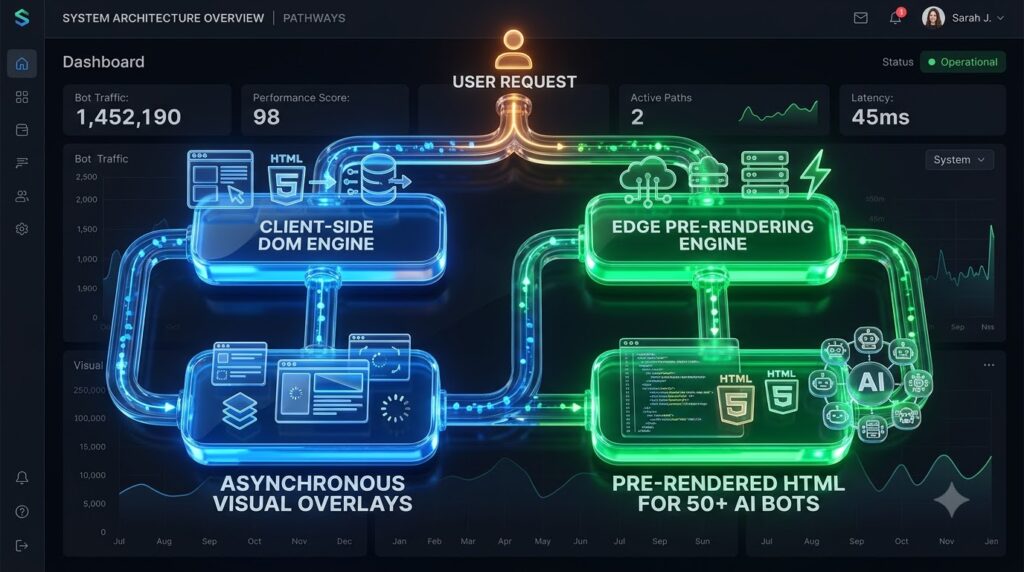
Installing the platform requires placing a lightweight script snippet into your site’s <head> element, which can be deployed via Google Tag Manager, WordPress, Shopify, or directly through CDN edge rules (Cloudflare, Akamai). The architecture relies on a dual-engine processing model:
- Client-Side DOM Engine: For standard browser sessions, the script loads asynchronously to safeguard Core Web Vitals. Once base HTML is loaded, it executes DOM manipulations—dynamic title insertion, header structuring, canonical tag placement, and JSON-LD injection—prior to visual paint.
- AI Search Visibility Engine: When an AI crawler user-agent is detected at the CDN edge, client-side execution is bypassed. Instead, the edge pre-rendering engine serves a fully compiled, static HTML snapshot. This ensures generative bots read your full content without requiring server writes.
2. Live On-Page Optimization & Visual Editor
Rather than delivering static PDF audit reports, the platform lets you establish programmatic, rule-based logic across entire URL patterns.
For instance, an SEO director can set a rule to prepend primary keywords to all <h1> tags within a specific e-commerce path or build custom meta descriptions automatically from body copy when tags are missing.
Changes can also be made visually through an On-Page SEO Editor, where changes made on a live preview are pushed live instantly across production through the overlay.
3. Programmatic JSON-LD Schema Automation
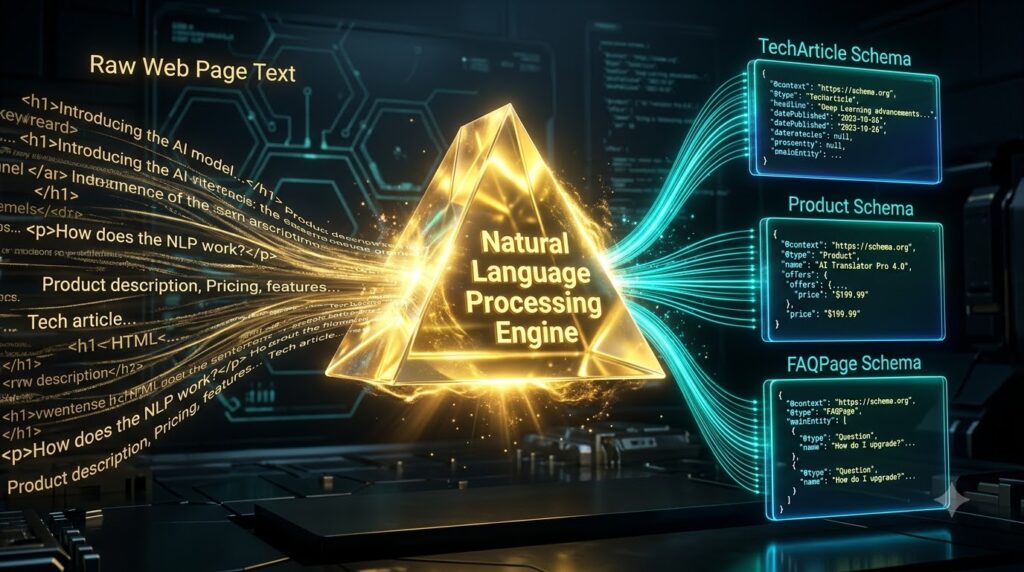
Structured data provides the explicit semantic context LLMs require to build knowledge graphs around your brand. Alli AI automatically crawls published pages, evaluates content intent, and injects validated JSON-LD scripts without manual engineering.
                    ┌──────────────────────────────────┐
                    │      Contextual Page Content     │
                    └────────────────┬─────────────────┘
                                     │
                                     ▼
                    ┌──────────────────────────────────┐
                    │   Natural Language Processing    │
                    └────────────────┬─────────────────┘
                                     │
            ┌────────────────────────┼────────────────────────┐
            ▼                        ▼                        ▼
┌───────────────────────┐┌───────────────────────┐┌───────────────────────┐
│  TechArticle Schema   ││    Product Schema     ││    FAQPage Schema     │
├───────────────────────┤├───────────────────────┤├───────────────────────┤
│ • Author Entities     ││ • Live Availability   ││ • Q&A Pairs           │
│ • Publication Dates   ││ • Currency & Pricing  ││ • Direct AI Citations │
│ • Technical Subject   ││ • Aggregate Ratings   ││ • SERP Rich Snippets  │
└───────────────────────┘└───────────────────────┘└───────────────────────┘
Pros, Cons, and System Limitations
Key Strengths
- Deployment Velocity: Eliminates developer bottlenecks by deploying sitewide technical fixes in under 15 minutes.
- Native AEO/GEO Indexing: Edge pre-rendering converts JavaScript-heavy pages into clean static markup for over 50 AI search crawlers.
- Portfolio Scalability: Allows growth teams to control dozens of client or brand properties from a single interface.
- Framework Agnostic: Works across legacy monoliths, headless platforms, WordPress, Shopify, Next.js, and custom React setups.
Technical Limitations
- Subscription Dependency (Vendor Lock-in): Because changes exist in an overlay layer, canceling your subscription reverts deployed modifications. To retain fixes permanently upon offboarding, teams must export and hardcode approved changes directly into their primary CMS.
- Audit Signal Noise: The automatic audit engine can trigger thousands of recommendations. Without experienced SEO oversight to filter these suggestions, teams risk pushing low-impact updates.
Commercial Breakdown & Cost Comparison
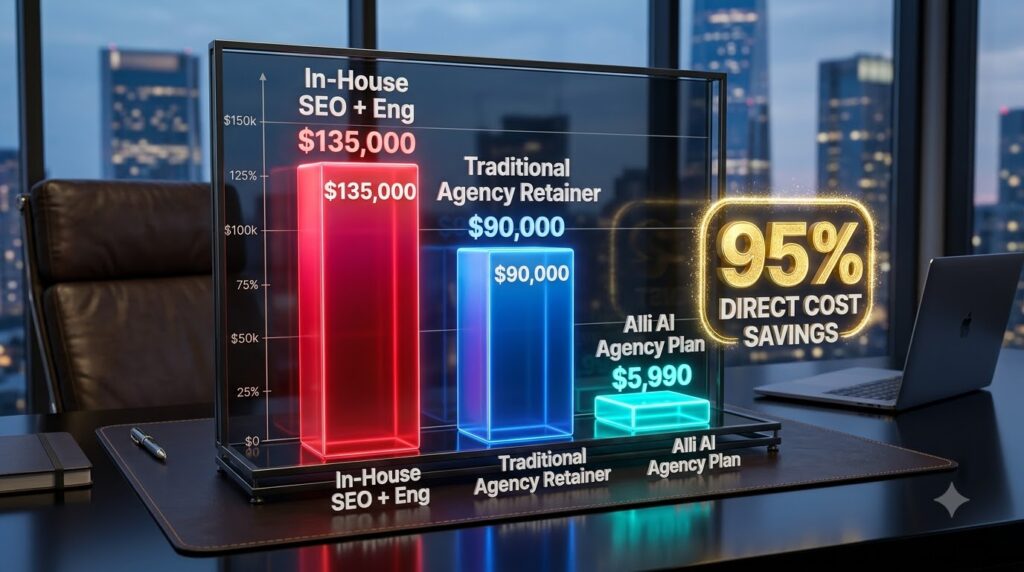
When evaluating enterprise software, subscription fees should be weighed against engineering labor and agency retainers.
Annual Cost Realization ($ USD)
┌─────────────────────────────────────────────────────────────┐
│ In-House Tech SEO + Eng. ($120k–$150k Base + Developer Time)│
├─────────────────────────────────────────────────────────────┤
│ Agency Retainer ($60k–$180k / Year)                         │
├─────────────────────────────────────────────────────────────┤
│ Alli AI Agency Plan ($5,990 / Year Billed Annually)         │
└─────────────────────────────────────────────────────────────┘
| Plan Tier | Billed Annually (Monthly Equivalent) | Managed Sites Included | Tracked Keywords | Included Team Seats | Key Architectural Features |
| Business | $249 / mo ($2,990/yr) | 5 Sites | 500 | 5 Seats | AI Visibility Engine, Pre-rendering for 50+ bots, Speed Optimizer |
| Agency | $499 / mo ($5,990/yr) | 15 Sites | 2,000 | 15 Seats | All Business Features + API Access & White-Label Snippet Hosting |
| Enterprise | Custom ($999/mo+ base) | 50+ Sites | 5,000+ | 50 Seats | All Agency Features + Full Custom SLA & Enterprise Account Manager |
In-House vs. Agency vs. Automation ROI
- In-House Senior SEO Engineer: Salaries typically range from $120,000 to $150,000 annually. However, an engineer still relies on front-end development resources to deploy code, leaving execution backlogs open.
- Traditional Agency Retainer: Agency retainers generally range between $5,000 and $15,000 per month ($60,000 to $180,000 annually). While agencies offer valuable strategy, their recommendations still require client-side engineering tickets to go live.
- Automated Software Model: Deploying the Agency plan at $499/month allows teams to manage fixes at scale. Resolving 10,000 technical issues in month one—representing roughly 150 hours of internal engineering work at $85/hour—can offset the software’s annual cost within the first month of deployment.
Competitive Matrix
| Feature / Capability | Alli AI | Surfer SEO | BrightEdge | Conductor |
| Primary Architecture | Automated Code Overlay & Edge Engine | On-Page Content Scoring & Editor | Enterprise SERP Data Analytics | Search Analytics & Content Intelligence |
| Live Code Deployment | Native (Dynamic JS Overlay) | None (Manual CMS Entry) | Limited / Add-on Modules | None (Requires Dev Ticket) |
| AI Bot Edge Pre-Rendering | Native (50+ AI User-Agents) | None | None | None |
| JSON-LD Schema Generation | Native (Contextual Injection) | Basic Prompts | Recommendations Only | Recommendations Only |
| Deployment Time | < 15 Minutes | Immediate (SaaS Application) | Weeks to Months Setup | Weeks to Months Setup |
Editor’s Perspective: Operational Impact
The value of automated search infrastructure isn’t just about speed—it’s about protecting execution momentum. Traditional technical SEO often fails in the gap between recommendation and implementation. By moving execution to the edge layer, marketing departments can manage performance directly instead of competing for limited engineering sprint cycles.
Who Should Use vs. Avoid Alli AI
Recommended For:
- Enterprise Marketing Teams: Organizations facing developer backlogs that delay site health improvements.
- Digital Agencies: Teams managing multi-brand client portfolios that need white-label reporting and unified site rule management.
- Headless & JS-Heavy Stacks: Businesses using React, Angular, or Next.js setups where AI crawlers struggle to render dynamic client-side content.
Not Recommended For:
- Single-Site Bloggers: Solo creators running simple WordPress setups with direct control over their site source code.
- Teams with Immediate Engineering Bandwidth: Companies with dedicated development teams that can implement source-code changes instantly.
- Businesses Resistant to Subscription Overlays: Teams that want all modifications hardcoded directly into their primary CMS database from day one.
Final Recommendation & Next Steps
If your team is repeatedly delayed by engineering backlogs, Alli AI provides a high-ROI method for accelerating search execution. Its edge pre-rendering engine ensures your site remains indexable for standard search engines and modern AI crawlers alike.
What You Should Do Next:
- Audit Your AI Accessibility: Test your core product and category URLs through GPTBot and ClaudeBot user-agents to confirm whether client-side JavaScript is hiding content from AI crawlers.
- Quantify Your Engineering Backlog: Estimate the labor cost of your current SEO ticket pipeline. If your dev backlog exceeds 40 hours of queued work, test the platform’s 1-line script on a 14-day trial to evaluate live overlay performance.
- Audit Your Master Data & Schema: Verify your existing JSON-LD markup through Google’s Rich Results Test tool before deploying automated schema rules sitewide.
🔍 Related Enterprise AI & Software Optimization Infrastructure Guides
For CMOs, IT directors, and enterprise growth leaders evaluating search infrastructure, private AI servers, and software ROI, explore our related technical reviews and benchmarks:
- AI Server Deployment: Learn how enterprise hardware hosts private LLMs in Zanus AI Server Deployment & Infrastructure Setup.
- Hardware vs Appliance: Compare local AI server architectures in Zanus AI Appliance vs Dedicated AI Server.
- Multi-Entity Accounting SaaS: Streamline corporate reporting in Joiin Review 2026: Multi-Entity Financial Consolidation.
- B2B Cold Email Automation: Evaluate domain deliverability safeguards in Woodpecker.co Review 2026: Enterprise Cold Email.
- AI Agent Software Costs: Analyze credit overages and voice surcharges in Is Lindy AI Worth It in 2026? Pricing & Alternatives.
References
- Alli AI Official Documentation & Platform OverviewAlli AI Product Architecture, Features, and Enterprise Automation Systemshttps://www.alliai.com/
- Alli AI Official Pricing & Tier StructureCurrent Commercial Tiers, Site Allocations, and API Capacity Limitshttps://www.alliai.com/pricing
- Google Search Central Documentation on Structured DataOfficial Guidelines for JSON-LD Schema Implementations and Rich Results Compliancehttps://developers.google.com/search/docs/appearance/structured-data/intro-structured-data
- Schema.org Community Vocabulary StandardsTechnical Specifications for Article, Product, Organization, and FAQPage Entity Schemashttps://schema.org/
- W3C Document Object Model (DOM) Technical SpecificationsOfficial Standards on Dynamic DOM Manipulation, Rendering Pipelines, and Script Executionhttps://www.w3.org/TR/DOM-Level-3-Core/