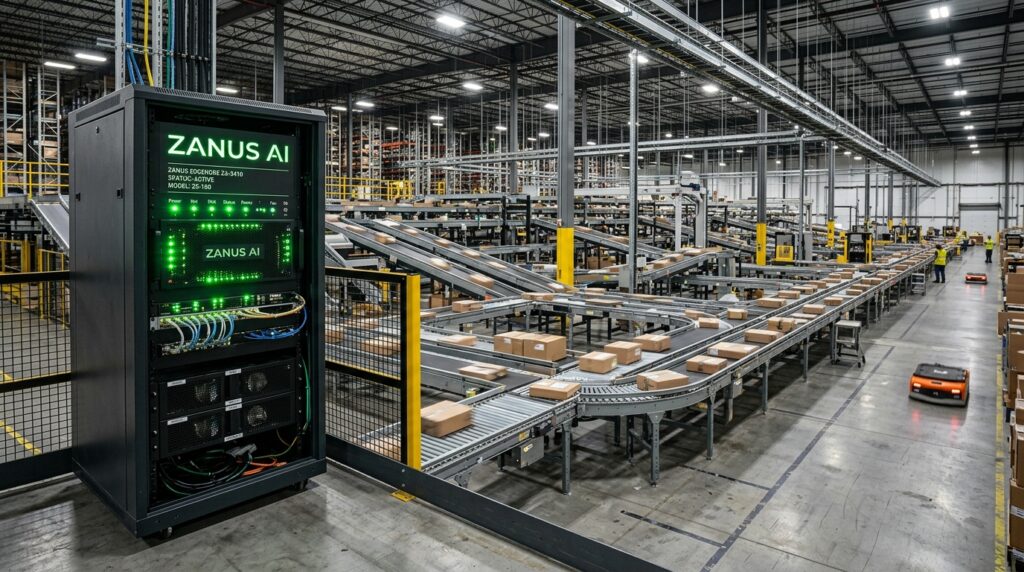
Analyzing zanus ai for logistics operations demonstrates that many enterprises are facing a harsh operational reality: running real-time routing on the public cloud is an expensive mistake.. Unstable Wide Area Network (WAN) latency, combined with non-linear cloud data egress fees, is quietly crushing the return on investment (ROI) of automation initiatives.
Zanus AI has entered the market as a hybrid/edge-native supply chain orchestration and optimization platform designed to eliminate this exact bottleneck. This in-depth review analyzes Zanus AI’s ability to solve real-world operational bottlenecks, breaks down its technical specifications, and evaluates the major trade-offs that Chief Technology Officers (CTOs) must weigh.
Zanus AI Platform Overview
Zanus AI is not just another traditional Transportation Management System (TMS) or Warehouse Management System (WMS). Instead, it operates as an AI orchestration layer that hooks directly into existing Warehouse Control Systems (WCS) and fleet telematics hardware. The core engineering goal of Zanus AI is to shift high-frequency deep learning inference workloads away from centralized public clouds and execute them locally on the enterprise’s on-premises edge infrastructure.
What Core Business Problem Does It Solve?
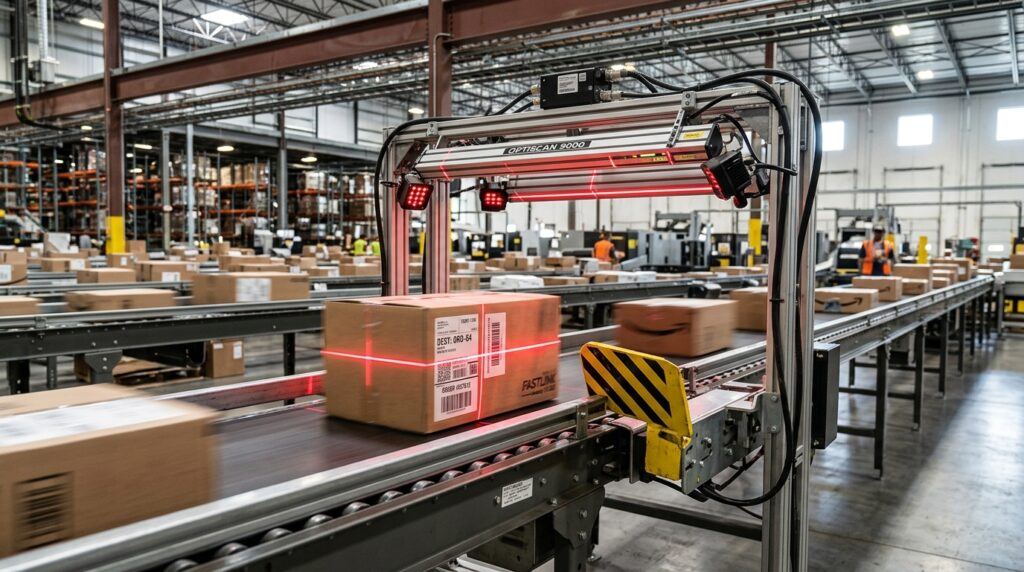
In high-throughput distribution centers, the physical latency budget for directing routing shoes, pop-up wheels, or conveyor diverters is strictly capped between 200 and 500 ms. Routing scanning data to the cloud via LEO satellites or cellular networks, and then waiting for a cloud API response, routinely pushes tail latency ($p99$) past 120–250 ms. This delay introduces a severe risk of misrouted sorting, physical jams, and costly warehouse shutdowns. Zanus AI bypasses this bottleneck entirely by running localized optimization models directly over the facility’s internal 10GbE local area network (LAN).
Best For
Zanus AI is best for: Medium-to-large logistics enterprises running high-capacity distribution centers (processing over 100,000 packages per day) and continuous fleet operations that require immediate, dynamic route optimization independent of active internet connections.
Key Strengths
- Sub-15 ms LAN-Level Inference: By containerizing quantized machine learning models (FP8 and NVFP4 formats) via edge microservices, Zanus AI runs optical character recognition (OCR) on 2.5 MB shipping manifests and executes Vehicle Routing Problem (VRP) updates in under 15 ms. This fits comfortably within the strict logic cycles of industrial programmable logic controllers (PLCs), such as the Siemens SIMATIC S7-1200 running on the sorting floor.
- Elimination of the Cloud “Egress Multiplier”: By processing shipping manifests and QA camera imagery locally at the edge, Zanus AI eliminates up to 85% of the data volume that would otherwise be uploaded to or downloaded from the cloud. This insulates businesses from the asymmetric tiered egress pricing structures enforced by major cloud providers like AWS or GCP.
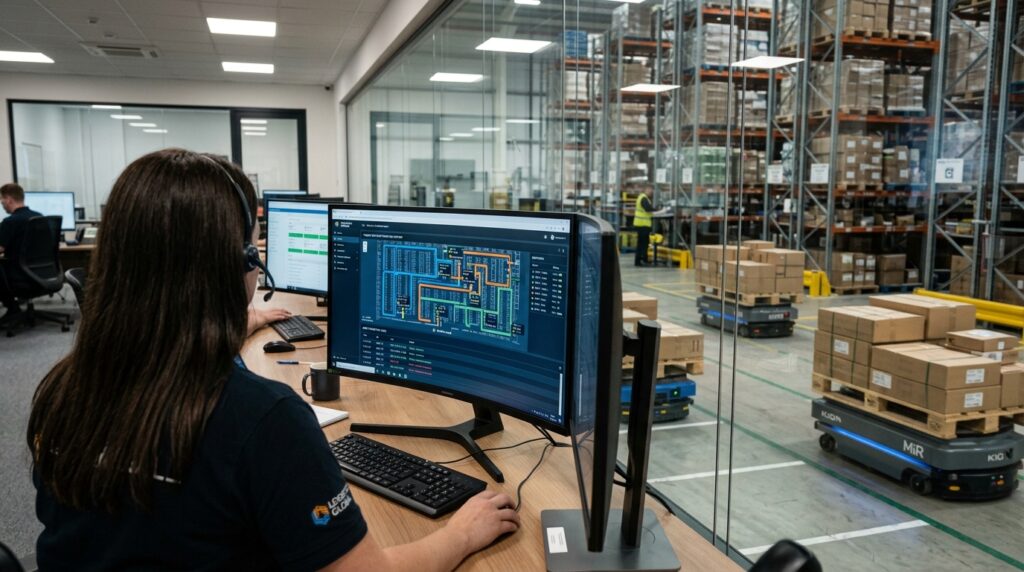
- Resilient Offline Operations: If the primary WAN link drops or suffers from weather-induced degradation (a common pain point with Starlink or cellular 5G networks), Zanus AI’s core routing engines continue running locally on on-premises edge servers (such as Dell PowerEdge R760 or HPE ProLiant systems), keeping Autonomous Mobile Robots (AMRs) and conveyor lines moving without interruption.
Limitations and Technical Trade-offs
No infrastructure choice is without compromises. Deploying Zanus AI requires accepting significant architectural trade-offs:
- Substantial Initial CapEx Investments: Achieving guaranteed edge inference speeds requires deploying dedicated, hardened on-premises AI appliances equipped with specialized hardware accelerators (such as NVIDIA L40S GPUs or short-depth edge servers like the Dell PowerEdge XE2420).
- Vulnerability to Master Data Bottlenecks: Zanus AI’s edge routing algorithms are highly sensitive to upstream data anomalies. If a warehouse record contains incorrect pallet dimensions or inaccurate net weights, the local model will generate unfeasible slotting or loading plans, causing immediate friction on the warehouse floor.
- High Edge Administration Overhead: Managing containerized workloads and deploying model weights across dozens of satellite warehouses introduces operational complexity. Without automated orchestration tools like Dell NativeEdge, localized IT maintenance costs can quickly erode the software’s financial benefits.
Zanus AI for Logistics: Operational Performance Metrics
| Evaluation Metric | Traditional Cloud API Architecture | Zanus AI Edge Solution |
| Routing Decision Latency | 100 – 250 ms (Highly Unstable) | < 15 ms (Predictable via 10GbE LAN) |
| Data Egress Fees | High (Scales with QA image & PDF volume) | $0 (Raw data remains local) |
| WAN Disconnection Risk | High (Facility stops if WAN goes down) | Very Low (Continuous offline autonomy) |
| Deployment Complexity | Low (Straightforward cloud API integration) | High (Requires on-premises server configuration) |
Cost of Ownership Analysis (Pricing)
Zanus AI utilizes an Enterprise Custom Licensing model based on two primary operational variables: the total number of edge nodes deployed across distribution centers and the volume of active automated assets (trucks and AMRs) being optimized.
FinOps Insight
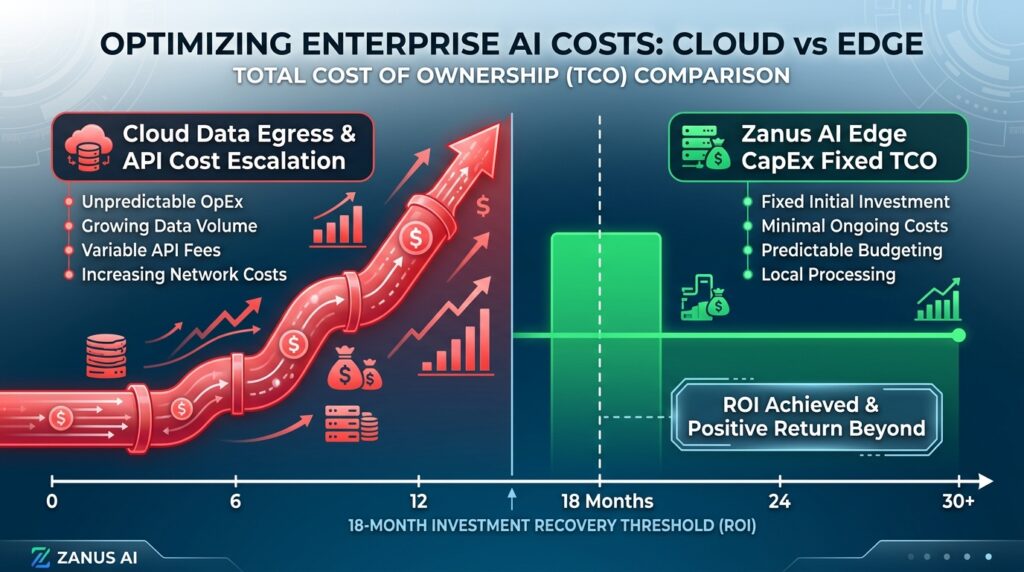
While the upfront software licensing and hardware CapEx can easily reach $40,000 to $50,000 per major distribution center, a standard 36-month amortization schedule places the ongoing monthly Total Cost of Ownership (TCO) under $2,000 (factoring in average industrial electricity consumption and vendor support). Compared to cloud AI document extraction services that can cost tens of thousands of dollars per month when processing millions of scanned pages, this edge architecture typically hits its break-even point and delivers positive ROI within 18 months.
Pros & Cons
Pros
- Maximizes data security for high-value shipping manifests and real-time transit telemetry by adhering to a strict Need-to-Know architecture, shielding data from public cloud ransomware campaigns.
- Delivers single-digit millisecond response times that easily keep pace with high-speed automated sorting conveyors moving at 2.5 m/s.
- Integrates smoothly into modern enterprise infrastructure using standard containerized deployments.
Cons
- Demands rigorous, continuous sanitization of product master data before deployment.
- Integrating the edge software layer with legacy warehouse PLC infrastructure can require significant initial engineering effort.
- Unsuitable for small regional operators or owner-operators managing fewer than 20 vehicles, as they lack the data scale needed to offset the edge hardware costs.
Alternatives to Consider
- AWS Supply Chain / Google Cloud Supply Chain Twin: Best for enterprises committed to a cloud-first approach who are willing to accept WAN latency and recurring bandwidth fees to avoid managing on-premises server hardware.
- Cloud-Hosted OR-Tools Configurations: Ideal for businesses that only require static batch routing (e.g., generating dispatch schedules once every morning) rather than dynamic, real-time route adjustments based on live traffic and terminal delays.
Editor’s Take
IF your organization operates large-scale distribution centers and faces frequent sorting line stoppages due to network latency, or if your cloud bills are skyrocketing due to large volumes of QA imagery and scanned customs documents, THEN migrating to Zanus AI’s edge platform is a highly strategic infrastructure move, BECAUSE it addresses the physics of real-time industrial control networks while keeping high-value transit telemetry safely behind your local firewall.
Final Verdict & Action Plan
Do not attempt a big-bang deployment of Zanus AI across your entire fulfillment network simultaneously. Instead, execute this structured three-step implementation plan:
- Audit Your Master Data: Verify that your warehouse dimensions, SKU weights, and packaging attributes maintain an independent accuracy rate above 98% to prevent model errors.
- Launch a Localized PoC: Deploy Zanus AI on a single edge server node at your highest-volume distribution center to measure actual $p99$ tail latency across your existing 10GbE LAN switches.
- Optimize Scanned Document Workflows: Implement automated grayscale filtering and smart compression at your receiving docks to reduce raw manifest file sizes from 5 MB to under 500 KB, accelerating your edge OCR processing speeds before scaling out the platform.
Your Next Step
Eliminating volatile cloud data egress penalties and shielding your high-speed fulfillment lines from network latency demands an intentional pivot toward edge-level server containment. To successfully blueprint your secure sorting infrastructure and present a clear ROI analysis to your executive board, we recommend exploring our comprehensive technical resource hub:
- Procurement Scale Evaluation: Determine the optimal hardware configurations and VRAM thresholds for your node workloads at Zanus AI Prime vs Quantum.
- Structural Component Mapping: Audit your secure server room’s electrical draw, cooling capacity, and short-depth chassis parameters via the Zanus AI Hardware Infrastructure.
- System Capabilities Overview: Explore how the pre-loaded local operating system handles automated document intelligence and secure API gates in the Zanus AI Deep Review.
- Spatial Telemetry Applications: For a detailed engineering guide on how localized visual computing automates drone photogrammetry under strict regional statutes, read our manual on minimizing the Florida SB-4D inspection cost.
Don’t let unstable WAN disconnections or tiered cloud egress multipliers stall your active transit assets—audit your master data pipelines and deploy your turnkey isolated network node today.
If you are scaling your enterprise AI deployment and need robust, high-bandwidth bare-metal hosting without exorbitant cloud egress fees, check out our in-depth NovoServe Review and our NovoServe vs Hetzner Comparison to find the right server specs for your budget. Additionally, if your team manages multi-language workflows or cross-border project documentation, read our hands-on Palabra AI Review and Palabra AI vs Lokalise Breakdown to learn how automated AI localization can streamline your content pipeline.
References
- Amazon Web Services: Amazon S3 Cloud Storage Pricing and Egress Structures https://aws.amazon.com/s3/pricing/
- Microsoft Azure: Blob Storage Pricing & Hot/Cool Access Tiers Analysis https://azure.microsoft.com/en-us/pricing/details/storage/blobs/
- Akave Cloud: The 2026 Guide to Decentralized Storage and Zero Egress Fees https://www.akave.com/
- Dell Technologies Info Hub: Designing Architecture for the Edge with PowerEdge Servers https://infohub.delltechnologies.com/
- NVIDIA Developer Blog: Optimizing Intelligent Document Processing (IDP) Using NIM Microservices https://developer.nvidia.com/blog/
- Federal Bureau of Investigation (FBI): Alert on Surging Cyber-Enabled Cargo Theft and Cyber Security Breaches https://www.ic3.gov/