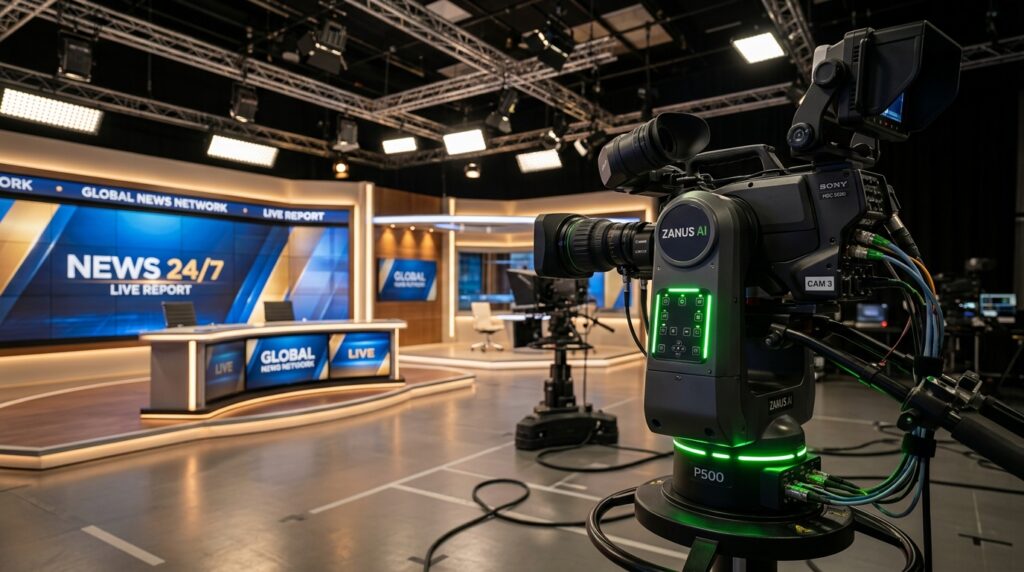
Evaluating zanus ai for broadcasting infrastructures demonstrates that the modern television industry is facing a punishing technical and financial dilemma.: the demand for high-quality live production content is surging, yet studio operational budgets and floor staff numbers are shrinking. Manually operating complex camera setups during multi-day sports tournaments or back-to-back news studio broadcasts is not only expensive, but it also introduces operational risks driven by human fatigue.
The AI-driven robotic camera control ecosystem developed by Zanus Robotics (including their Cosmos and Axis product lines) addresses this operational bottleneck by automating the physical mechanics of camera movement. However, instead of replacing operators with rigid, pre-programmed position presets, this technology optimizes live workflows through dynamic predictive AI subject tracking and high-precision motor control.
This evaluation provides a deep technical analysis, real-world deployment assessment, and the operational trade-offs required when integrating Zanus AI hardware into a professional broadcast infrastructure.
1. System Overview & Target Deployment
Zanus does not engineer standard consumer Pan-Tilt-Zoom (PTZ) hardware. Their ecosystem focuses on heavy-duty, software-defined robotic pan-tilt heads engineered to support full-sized, master-grade studio camera configurations (such as standard enterprise models from Sony, Grass Valley, and Panasonic). The primary engineering problem this platform solves is transforming heavy broadcast camera chains into autonomous robotic assets that track high-speed host or athlete movements over IP networks with near-zero latency.
Best For
- Mid-to-Large Scale News Broadcasters: Organizations looking to fully automate movement framing within fixed daily news sets without dedicating manual camera operators to the studio floor.
- Live Sports & E-sports Production Facilities: Production teams requiring fluid, high-speed camera tracking in hazardous physical locations or tight spaces where a human operator cannot be safely stationed.
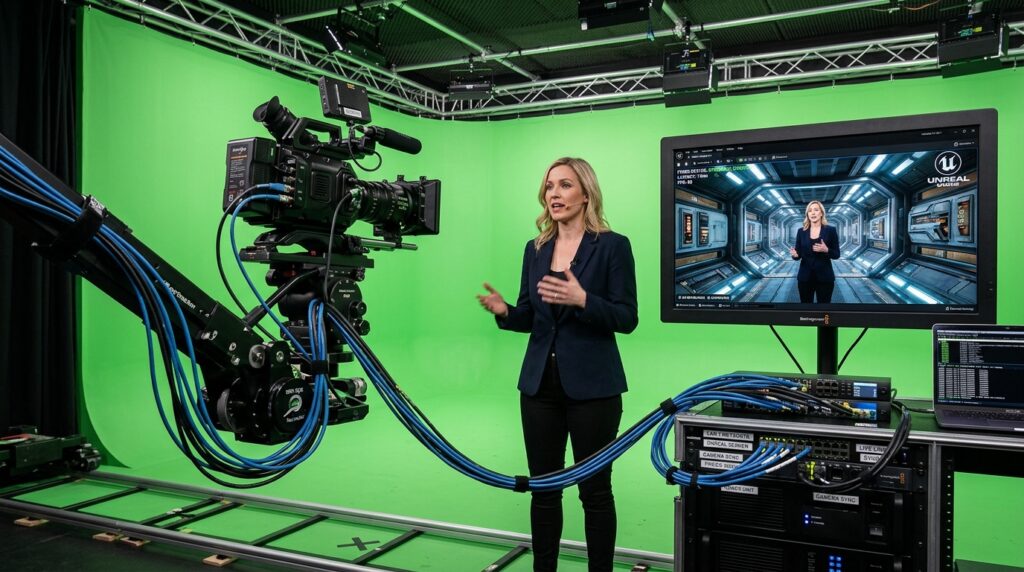
- Virtual & Augmented Reality (AR/VR) Studios: High-end environments deploying Unreal Engine that require high-precision, frame-accurate camera positioning data streamed in real time.
2. Core Technical Strengths & Engineering Architecture
Direct-Drive Brushless Motors & High-Resolution Encoders
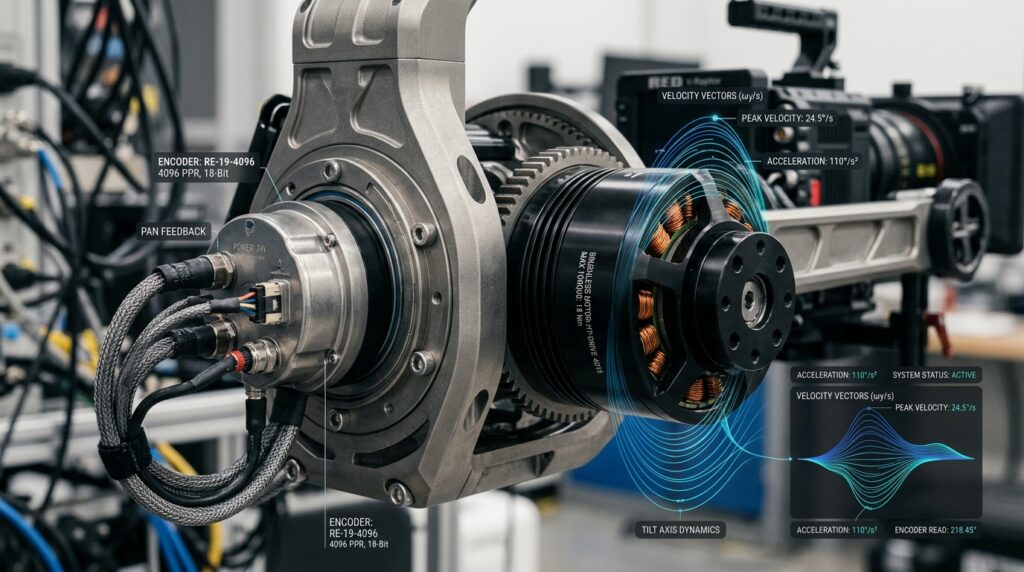
A primary failure mode of lower-tier automated camera mounts is physical jitter or micro-stutters when initiating or dampening a pan/tilt command. Zanus mitigates this mechanical bottleneck by deploying high-torque, direct-drive brushless motors integrated with industrial-grade, high-resolution rotary encoders. This mechanical design eliminates backlash entirely, allowing the head to execute smooth, ultra-slow pan movements without visible stepping, or snap to high-speed sports action with microscopic mechanical error tolerances.
Predictive Velocity Vector Tracking Algorithms
In live broadcast environments, traditional computer vision bounding boxes often fail when a subject turns away or is partially obstructed. The Zanus software stack calculates continuous velocity vectors rather than just tracking fixed visual assets. If an anchor walks across a physical or virtual stage, the AI engine projects the subject’s trajectory and instructs the drive motors to accelerate smoothly ahead of the movement curve. This prevents the camera from “dragging behind” the talent—a common tracking flaw that disrupts visual continuity for home viewers.
Open Industry Standards & Metadata Interoperability
Rather than forcing networks into a vendor-locked sandbox, the Zanus control architecture integrates directly into established broadcast infrastructures. The robotic heads support industry-standard control protocols like VISCA over IP. Crucially for virtual production environments, they output real-time spatial positioning metadata over network fabrics using the open FreeD protocol, allowing instant synchronization with render engines.
3. Zanus AI for Broadcasting: Limitations & Infrastructure Trade-offs
Despite its automated advantages, integrating a Zanus robotic deployment introduces distinct enterprise challenges that Technical Directors must evaluate before capital allocation:
- High Initial Spatial Calibration Overhead: The underlying AI model requires an exact digital mapping of the physical studio environment. If a heavy-duty tripod or floor rail shifts by even a few millimeters during set adjustments, the optical tracking vectors and the FreeD metadata stream will lose alignment, demanding a time-consuming recalibration cycle.
- Absence of Subjective Artistic Intent: While the tracking algorithms excel at technical execution—maintaining strict composition rules like the rule of thirds—AI cannot replicate spontaneous artistic decisions. It cannot sense the dramatic pacing of a live show, catch an unscripted reaction shot, or interpret emotional subtleties the way a seasoned human camera operator can.
- Payload Vulnerabilities with Heavy Box Lenses: Although their premium robotic heads are rated for major studio payloads, mounting massive long-focal-length sports box lenses shifts the system’s center of gravity. Executing high-acceleration pans with these setups can stress motor thermals and trigger safety torque limits if the counter-balancing isn’t meticulously engineered.
4. Operational Impact & ROI Analysis
To guide long-term capital expenditure planning, the table below highlights the operational differences between legacy manual production and a Zanus automated robotic environment:
| Evaluation Metric | Manual Camera Operations | Zanus AI Robotic System |
| Long-Term Labor Costs | High (Requires dedicated technicians per camera per shift). | Low (A single operator can oversee a multi-node cluster from a master control room). |
| Execution Consistency | Variable (Subject to human fatigue, reaction lag, and shifts). | Absolute (Maintains identical spatial tracking accuracy indefinitely). |
| Creative Flexibility | Exceptional (Highly responsive to unscripted artistic changes). | Moderate (Governed by structural tracking logic and rules). |
| Upfront Capital Expenditure | Low (Limited to mechanical tripods and base fluid heads). | High (Requires specialized robotic heads and software licensing). |
| Virtual Studio Integration | Complex (Requires expensive external mechanical tracking sensors). | Native (Streams synchronized FreeD mechanical data directly over LAN). |
5. Strategic Editorial Recommendations
Editor’s Perspective
If your facility manages structured, high-volume broadcast formats like daily news strips, repeatable talk show sets, or continuous E-sports leagues, then migrating to a Zanus AI robotic infrastructure offers a clear path to operational efficiency. Because it directly reduces recurring floor-crew overhead while providing the frame-accurate, low-latency FreeD data streams necessary to drive modern 3D virtual sets.
However, for unscripted live entertainment, high-drama sports, or complex artistic programming where the camera serves as an active storytelling element, maintaining professional manual operators remains essential to preserving the visual narrative.
CTO Action Plan
- Phase 1 (Infrastructure Audit): Before purchasing hardware, verify that your local network switch fabric fully supports Precision Time Protocol (PTP) synchronization and that your LAN has the dedicated bandwidth to handle low-latency VISCA and FreeD IP traffic alongside raw video streams.
- Phase 2 (Hybrid Deployment Strategy): Avoid a binary shift to full automation. Deploy a hybrid configuration: utilize Zanus robotic heads on the left and right studio wings to lock down predictable wide and host tracking shots, and retain a human operator on the center camera to capture close-up emotional nuances.
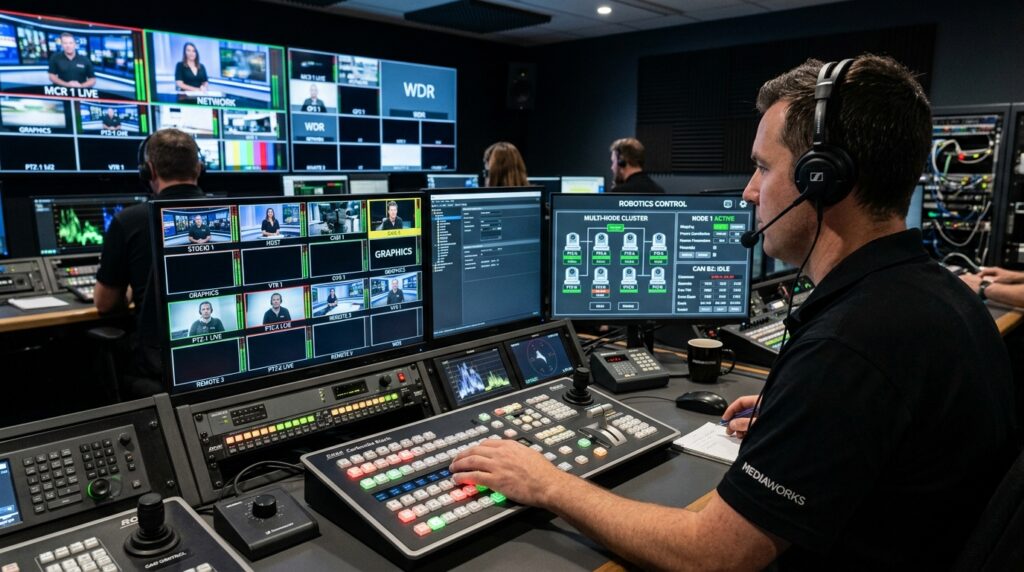
Your Next Step
Eliminating unpredictable operational lag and shielding your high-throughput media pipeline from mechanical tracking failures requires a deliberate transition toward hardware-level isolation. To successfully map your facility’s bandwidth requirements and present a certified asset procurement analysis to your executive leadership team, we recommend analyzing our separate enterprise cluster blueprints:
- Appliance Performance Metrics: Verify the exact compute density and memory thresholds required for your local index data by exploring the Zanus AI Prime vs Quantum infrastructure tiers.
- Station Room Layouts: Audit your secure studio facility’s electrical loads, cooling capacities, and server rack chassis dimensions via the Zanus AI Hardware Infrastructure manual.
- Operating System Core Features: Discover how the pre-installed private computing platform orchestrates containerized document conversion and media tools in our comprehensive Zanus AI Deep Review.
- Structural Telemetry Applications: For a detailed engineering guide on how edge-deployed visual computing layers automate drone photogrammetry under strict state regulations, see our technical breakdown on minimizing the Florida SB-4D inspection cost.
Don’t let unstable remote networks or high operational staffing overhead stall your live production timeline—conduct your network audit and deploy your turnkey zanus ai for broadcasting systems node today.
References
- Zanus Robotics Official Documentation: Technical product specifications and load capacities for Cosmos and Axis robotic pan-tilt heads. https://www.zanus.com
- Society of Motion Picture and Television Engineers (SMPTE): Standards for digital data transmission and FreeD protocol compliance for real-time camera tracking within live broadcast environments.
- Sports Video Group (SVG) Reports: Global industry analysis on AI-driven automation trends and robotic integration within international news and sports production facilities.