

1. Executive Summary: The Editor’s Verdict
Zanus AI for Property Managers is changing how Homeowners Associations (HOAs) and property management teams perform inspections, detect maintenance issues, and automate daily operations. But is it really better than traditional manual inspections?
Most property management firms and Homeowners Associations (HOAs) are quietly leaking data or burning thousands of dollars monthly on variable AI API token fees. While public cloud tools offer easy access, they pose significant risks regarding tenant Personal Identifiable Information (PII) leakage and volatile operational expenses (OpEx).
Zanus AI solves this problem by moving the entire AI operation out of the cloud and into a physical, on-premises server. If your organization handles thousands of multi-page Covenants, Conditions, and Restrictions (CC&Rs) documents, proprietary Vendor Service Level Agreements (SLAs), and sensitive tenant financial records, Zanus AI presents a compelling, long-term infrastructure investment. However, if your portfolio consists of fewer than a hundred single-family rentals, the significant upfront hardware cost (CapEx) makes it an impractical choice.
2. Zanus AI Product Overview & Core Matrix
What Strategic Problem Does It Solve?
Traditional property management systems (PMS) rely heavily on manual data entry for work orders, manual legal document matching, and predictable, script-based chatbots that fail when property regulations change. Zanus AI acts as an on-premises “Corporate Brain” that runs local, air-gapped Large Language Models (LLMs) with deep-reasoning processing capabilities. It ingests thousands of pages of text—from municipal codes to intricate equipment maintenance manuals—and translates them into automated resident actions and automated technical dispatching, all without sending a single byte of data to an external internet server.
Strategic Classification
- Best For: Mid-to-Large Real Estate Portfolios, High-Density Multifamily Assets, Large-Scale HOA Management Firms, and High-Security Commercial Property Entities.
Core Technical & Financial Benchmarks
| Evaluation Category | On-Premises Performance Score (1-10) | Editorial Assessment & Real-World Impact |
| Ease of Use | 6 / 10 | Requires an internal IT administrator or dedicated deployment support to configure local networking and hardware nodes. It lacks the instant click-and-run simplicity of browser-based public web apps. |
| Core Features | 9 / 10 | Includes deep OCR capabilities, local vector engines, automatic cross-document conflict identification, and custom tool call triggers for property management software. |
| On-Premises AI Capabilities | 9 / 10 | Runs highly advanced locally-hosted models featuring deep reasoning. Hallucinations are heavily mitigated when connected strictly to local asset databases via RAG. |
| System Integration | 8 / 10 | Connects efficiently via local network APIs to modern property management databases, CRM infrastructure, and smart IoT building meters. |
| Portfolio Scalability | 9 / 10 | Scaling does not require buying user seats or more API tokens. Scalability is achieved by simply stacking physical server units or expanding local GPU clusters. |
| Value for Money | 8 / 10 | High upfront capital expenditure (CapEx) but transitions the organization to a complete zero-token expense model indefinitely. |
| Customer Support | 7 / 10 | Provides dedicated commercial onboarding and enterprise hardware replacement assistance, but lacks a wide community forum network due to the private nature of the solution. |
Who Should Use Zanus AI?
Zanus AI is not designed for every property management business. It delivers the highest value for organizations that process large amounts of confidential operational data every day.
Best suited for
- Large HOA management companies
- Multifamily apartment operators
- Commercial real estate portfolios
- Smart city developments
- Property firms handling sensitive financial and resident records
May not be ideal for
- Individual landlords
- Small rental portfolios under 100 units
- Businesses looking for a simple cloud chatbot
- Teams without basic IT infrastructure
3. Deep-Dive Operational Breakdown
Architectural Compliance: Automating CC&Rs & Vendor Contracts
Manually cross-referencing conflicting vendor agreements with tenant leases creates an expensive liability gap. Zanus AI addresses this by running simultaneous local vector analyses. When a local property manager queries a maintenance conflict, the local Retrieval-Augmented Generation (RAG) engine accurately surfaces contrasting lease clauses without exposing internal metrics to public networks.
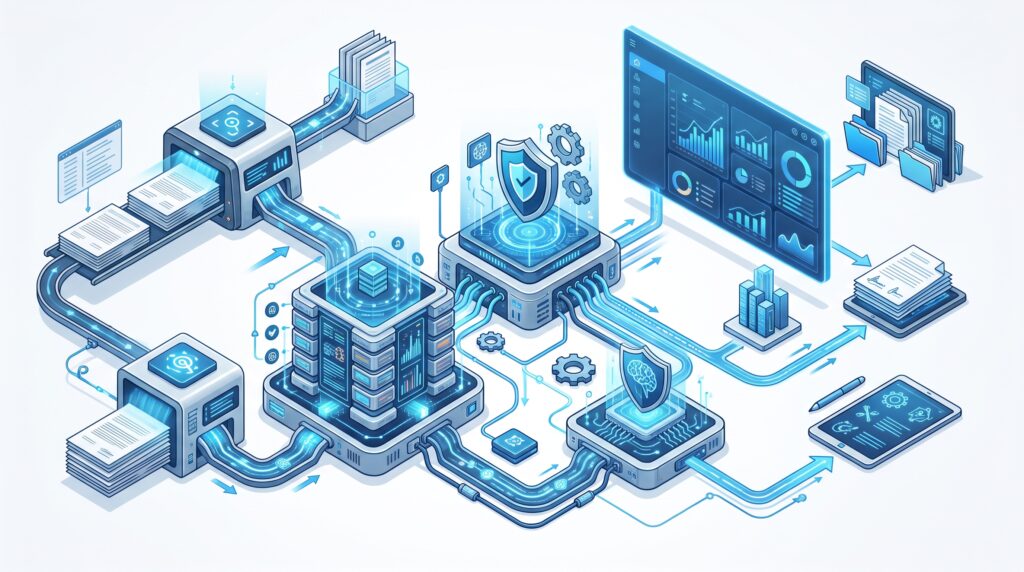
[Incoming Resident Design Application]
                  │
                  ▼
   [Zanus AI Automated Document OCR]
                  │
                  ▼
   [Local Precision Vector Matcher] ──(Cross-references Local CC&Rs)
                  │
                  ▼
  [Deep-Reasoning Structural Audit] ──(Checks Local Zoning/Height Regulations)
                  │
                  ▼
 [Local Executive Review Summary] ──(Presents Compliance Options to HOA Board)
Intelligent Maintenance & Asset Protection
Transitioning from reactive maintenance to automated, predictive planning protects the long-term asset value of real estate. Zanus AI uses extended context tracking to process years of multi-page technical manuals alongside operational logs from building systems (HVAC, elevators, main water valves).
By analyzing patterns of past component failures, the local model identifies indicators of degradation well before an expensive system collapse occurs. When an emergency issue is detected, the platform automatically flags its priority level, extracts the exact Standard Operating Procedure (SOP) schematic from internal documentation, and creates a ready-to-go task profile for field technicians.

Example Deployment Scenario
Imagine an HOA managing approximately 850 residential units with over 400 IP cameras, multiple elevators, and hundreds of maintenance requests each month.
By deploying Zanus AI on a local GPU server:
- Resident documents remain inside the community network.
- Maintenance manuals become searchable using local RAG.
- Emergency work orders are prioritized automatically.
- Building managers receive AI-generated maintenance summaries.
- No surveillance footage leaves the local infrastructure.
This allows the management team to reduce manual document searches while improving operational consistency and data privacy.
Comparison: Traditional Operations vs. Zanus AI Optimization
| Operational Lifecycle | Traditional Property Management Methods | Optimized Zanus Private AI OS System |
| Data Ingestion | Administrative personnel manually read emails, physical letters, and lease forms; high risk of oversight. | Local multi-format pipeline automatically converts scanned PDFs, audio voice files, and digital sheets. |
| Emergency Priority Tagging | Dependent on the shift worker’s subjective evaluation; creates delay queues for structural repairs. | Instant contextual semantic calculation; instantly scores critical assets and flags system-threatening emergencies. |
| Technical Standard Operating Procedures | Technicians must manually locate physical binder guides or browse disorganized file servers on-site. | Instantly attaches relevant structural schematics and safety checklists directly to the maintenance work order. |
| Asset Resource Allocation | Supervisors manually allocate technicians via phone calls, without real-time inventory visibility. | Automatically coordinates schedules with localized hardware inventories to suggest efficient staffing matches. |

4. Commercial Realities: The Case for Private On-Premises Architecture
The main reason to choose Zanus AI over conventional cloud-based alternatives comes down to security, data control, and predictable long-term costs.
Total Eradication of Tenant Data Leakage
Public cloud options require streaming tenant personal records, banking routing numbers, and internal board meeting minutes across public networks to third-party data farms. This creates significant cyber liability and risks violating evolving state-level privacy mandates. Zanus AI eliminates this risk entirely by operating inside your local area network (LAN), supportable under strict air-gapped states. Your data remains in your physical custody.
Financial Transformation: Trading Variable OpEx for Fixed CapEx
Public AI configurations utilize metered subscription tiers that charge you per input and output token. For a growing real estate operation dealing with millions of telemetry signals, automated customer responses, and multi-page contract audits, these monthly variable operational expenses can become highly unpredictable.
Zanus AI shifts this financial dynamic. The platform operates under a one-time asset acquisition model (CapEx). You purchase the local server cluster, and it provides unlimited text, audio, and analytical processing for your staff without any ongoing per-token or per-user fee structures.
Cloud AI vs Zanus AI
| Feature | Cloud AI | Zanus AI |
|---|---|---|
| Internet Required | Yes | No |
| Data Ownership | Shared | Full Control |
| Monthly AI Cost | Variable | Fixed |
| Local Processing | No | Yes |
| Privacy | Medium | High |
5. Strategic Trade-offs: What to Watch For
No technical solution is without its downsides. Before purchasing this class of enterprise equipment, keep these trade-offs in mind:
- Significant Initial Capital Commitment: The upfront financial requirement for enterprise-grade GPU servers is substantial. Organizations must be ready to commit to a major technical asset investment rather than a small monthly software subscription.
- Infrastructure Management Overhead: Because the system is hosted locally, your IT team or an outsourced systems integrator is responsible for maintaining the physical hardware, configuring secure backups, and maintaining network firewalls.
- Implementation Resource Investment: Achieving peak efficiency requires clean, well-organized initial data ingestion. If your historical property records, architectural drawings, and vendor documents are incomplete or full of errors, the internal database will need cleanup before the system can operate at full accuracy.
Key Benefits of Zanus AI
Compared with traditional cloud AI solutions, Zanus AI offers several long-term operational advantages:
- Zero recurring AI token costs
- Complete ownership of resident data
- Offline AI processing
- Local document intelligence
- Faster response for internal workflows
- Easier compliance with privacy regulations
6. Alternatives Matrix
If you are not ready for a full on-premises deployment, consider these alternative paths:
- Stan AI: A specialized, cloud-based property assistant designed for rapid setup with popular property management systems, though it lacks air-gapped security infrastructure.
- HOA180: A platform tailored for communities looking for comprehensive automated governance, but runs under a traditional subscription framework.
- Custom Cloud API Configurations: Building an internal solution using mainstream enterprise cloud APIs offers great flexibility, but leaves you exposed to variable monthly token pricing and complex compliance requirements.
Frequently Asked Questions
What is Zanus AI?
Zanus AI is an on-premises AI platform that helps property managers automate document analysis, maintenance workflows, and knowledge retrieval while keeping sensitive data inside local infrastructure.
Can Zanus AI work completely offline?
Yes. When deployed on local hardware, Zanus AI can process documents and answer questions without requiring an internet connection.
Is Zanus AI better than cloud AI?
It depends on the organization. Large HOAs and commercial property operators often benefit from better privacy, predictable costs, and lower latency, while smaller businesses may prefer cloud-based SaaS tools.
Does Zanus AI support Retrieval-Augmented Generation (RAG)?
Yes. Zanus AI can integrate local vector databases to retrieve information from internal policies, maintenance manuals, contracts, and resident documents.
Is Zanus AI suitable for small property managers?
Not always. Organizations with only a small number of properties may find cloud AI solutions more cost-effective due to lower upfront infrastructure costs.
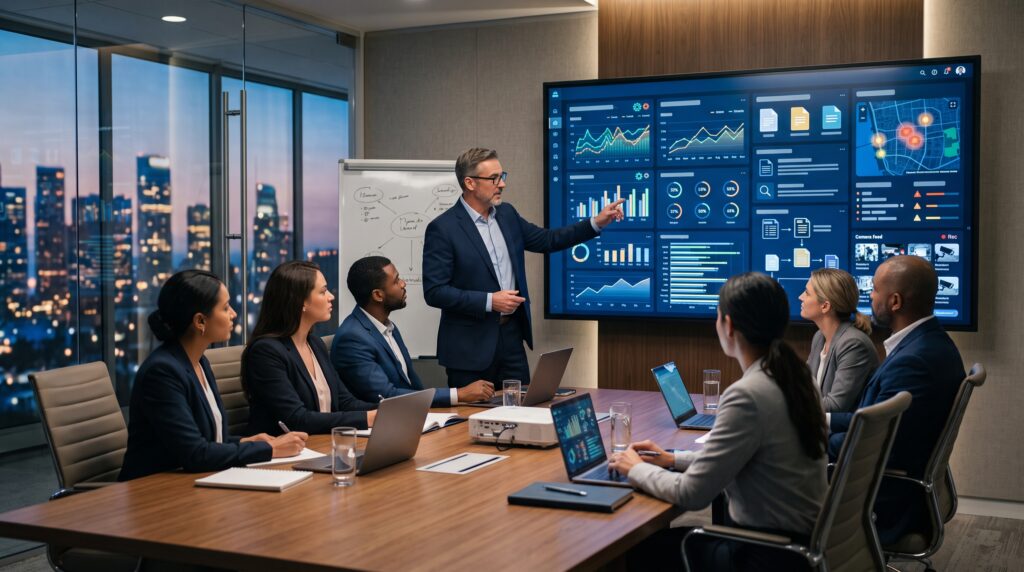
7. Editor’s Take & Clear Next Steps
Decision Matrix
- IF your organization operates a mid-to-large scale property enterprise, manages thousands of units across an active HOA network, handles highly sensitive tenant financial data, and wants to protect itself against volatile software bills…
- THEN investing in an on-premises solution like Zanus AI (Prime or Quantum clusters) is a highly logical choice. It builds long-term technical value, protects your data privacy, and lowers your long-term software operating costs.
- HOWEVER, IF you are a smaller real estate office managing a limited portfolio of local single-family properties with straightforward administrative needs…
- THEN the high initial hardware cost cannot be easily justified. You will likely find a faster return on investment using lightweight, cloud-based SaaS tools.
What to Do Next:
- Audit Your Data Volume: Calculate the total page count of your current portfolio guidelines, vendor agreements, and monthly resident interaction files to determine your optimal hardware configuration.
- Evaluate Your Local Network: Consult with your IT director to verify that your on-site server facilities meet the power, cooling, and security requirements for enterprise GPU hardware.
- Schedule a Technical Demo: Contact Zanus AI to request a localized system trial focused specifically on handling multi-document legal cross-referencing and work-order dispatching workflows.
Related Guides
If you’re planning a secure AI infrastructure for your property portfolio, these guides may also help: