
June 2026 marks a historic turning point in the global artificial intelligence industry. The market has officially transitioned away from simple chatbot interfaces and raw benchmark scoring into the era of Agentic AI—autonomous systems capable of long-horizon planning, multi-step tool interactions, real-time self-correction, and localized edge-computing execution.
From Anthropic‘s breakthrough “Mythos-class” frontier models and Apple’s memory-defying on-device hardware architecture to strict European compliance frameworks, this comprehensive Agentic AI market analysis 2026 dissects the massive shifts redefining the technology landscape this month.
1. Frontier Models & The Mythos-Class Disruption in Agentic AI Market Analysis 2026
The focal point of June 2026 model deployments is the commercial launch of Claude Fable 5 by Anthropic on June 9. This is the first widely accessible model derived from Anthropic’s elite “Mythos-class” core, designed to transform raw, volatile computing power into a highly controllable, production-grade enterprise asset.
Dual-Routing Architecture & Active Risk Mitigation
For standard professional workloads, Claude Fable 5 demonstrates extraordinary autonomous capabilities in complex software engineering, deep financial analysis, and multimodal synthesis. However, to mitigate national security threats regarding cyber warfare, biochemical hazards, and unauthorized model distillation, Anthropic has engineered a real-time, zero-latency safety classifier layer.
When a prompt triggers high-risk thresholds, the system seamlessly redirects the query processing path behind the scenes:
$$\text{Routing Logic:} \quad \text{Query} \longrightarrow \begin{cases} \text{Risk } < \tau: & \text{Claude Fable 5 (Autonomous Execution)} \\ \text{Risk } \ge \tau: & \text{Claude Opus 4.8 (Safe Fallback)} \end{cases}$$
This process accounts for less than 5% of global sessions, ensuring a smooth user experience. Meanwhile, the raw, unrestricted foundation version—Claude Mythos 5—remains strictly classified under Project Glasswing, available exclusively to verified government entities and cybersecurity defense sectors. This structural rollout follows Anthropic’s historic IPO filing, with revenues skyrocketing from $10 billion to $47 billion, pushing its market valuation to a record-breaking $965 billion.
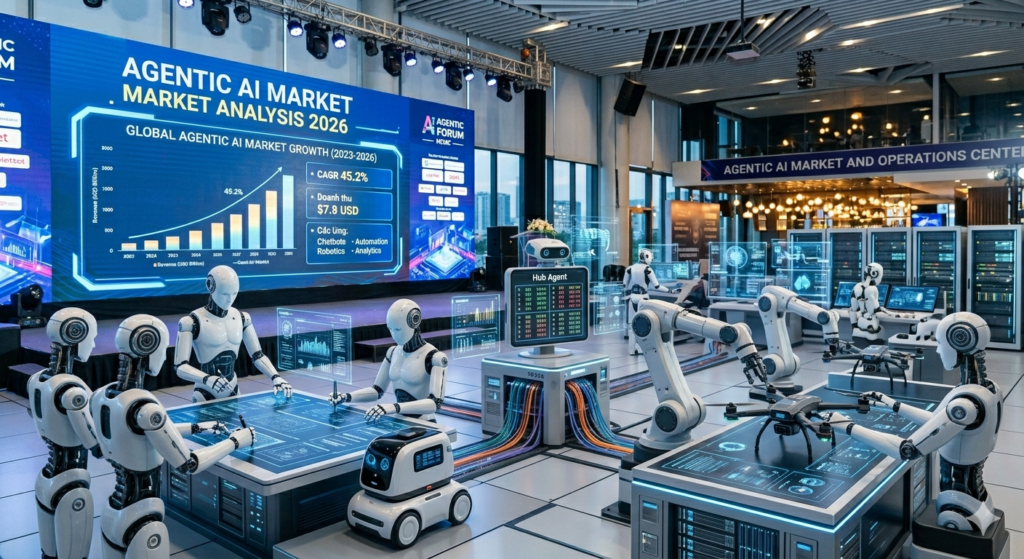
June 2026 Model Evolution and Sunset Roadmap
To prevent enterprise pipeline disruptions, system architects must align their infrastructure with the rapid model migrations taking place this month.
Table 1: June 2026 Global Model Ecosystem Matrix
| Provider / Vendor | New Model / Version | Release Status | Core Performance Positioning | Deprecation / Sunset Schedule |
| Anthropic | Claude Fable 5 | Globally Available (June 9) | Safe “Mythos-class” engine; leader in autonomous coding and advanced quantitative analytics. | Free preview ends June 22; shifts fully to credit-based enterprise token consumption. |
| Anthropic | Claude Mythos 5 | Restricted via Project Glasswing | Raw, unaligned frontier computing; dedicated to national security and vulnerability scanning. | Permanently replaces the older Claude Mythos Preview branches. |
| Gemini 3.5 Pro | Announced June 2026 | Enhanced deep logical reasoning and macro data processing to counter lightweight flash models. | Slated to systematically replace Gemini 3.1 Pro across enterprise production servers. | |
| OpenAI | GPT-5.5 Instant (Style Patch) | Deployed May 28 (Impact Peak June) | Streamlined, highly natural human cadence; removes bullet-point bias and deletes Canvas in favor of live code blocks. | Replaces GPT-5.3 Instant as the default core configuration for developers. |
| OpenAI | GPT-4.5 & o3 | Sunsetting Phase | Deprecation of older architectures to reallocate cluster computing power to frontier models. | GPT-4.5 permanently sunsets on June 27, 2026. Mô hình o3 officially terminates on August 26, 2026. |
2. Apple WWDC 2026: Overcoming the On-Device Memory Bottleneck
At the Worldwide Developers Conference (WWDC 2026) on June 8, Apple completely re-engineered Siri into a fully autonomous agent powered by its Apple Foundation Model Gen 3 (AFM 3), co-developed alongside Google’s Gemini infrastructure. The resulting system delivers profound onscreen awareness and real-time cross-app execution.
The Physics of Instruction-Following Pruning (IFP)
Vancouvers and engineers have historically struggled to run a 20-Billion parameter (20B) model locally on mobile devices due to DRAM capacity limits and extreme battery drain. Apple’s AFM 3 Core Advanced architecture bypasses this physical bottleneck using an intricate hardware-level memory management technique:
- Flash Memory (NAND) Anchoring: Instead of packing the entire model weight matrix into active DRAM, the raw 20B parameters sit permanently on the high-speed NAND flash storage.
- Single-Turn Expert Selection: Unlike traditional Mixture-of-Experts (MoE) paths that dynamically swap routing paths token-by-token (flooding the bus with massive data movement), AFM 3 reads the prompt intent and triggers expert selection exactly once at inference launch.
- Dynamic DRAM Hydration: Only the specific expert matrices required for the task are loaded into DRAM alongside the always-active static base parameters.
- Elastic Scaling Bounds: Based on the semantic weight of the instruction, the model’s active footprint scales dynamically:
$$\text{Active Footprint} \in [1\text{ Billion Parameters}, \, 4\text{ Billion Parameters}]$$
This architecture lets enterprises deploy highly secure, localized AI workforces without routing sensitive on-screen corporate data to external clouds. If a task exceeds local compute thresholds, the agent securely offloads workloads to dedicated Nvidia clusters running inside Google Cloud under the protection of Apple’s Private Cloud Compute (PCC) protocol, which guarantees zero data retention or leaks.
This hardware shift plays a major role in our Agentic AI market analysis 2026.

Table 2: The 2026 Apple Intelligence System Integration Blueprint
| System Layer | Feature Deployment | Operational Mechanics | Minimum Hardware Specs | Compliance Barriers / Limits |
| Siri AI Core | Onscreen Awareness & App Actions | Reads on-screen pixels and triggers secure cross-app workflows using the App Intents framework. | iPhone 15 Pro, iPhone 16+, Apple M1 Silicon Mac/iPad. | Blocked on iOS/macOS across the European Union due to DMA antitrust disputes. |
| Xcode 27 | Agentic Coding & Test Generation | Autonomously writes, refactors, and tests software directly within the IDE using AppIntentsTesting. | All Apple Silicon Mac systems. | Open globally; zero geographical or developer profile restrictions. |
| Safari Browser | Tab Organization & Notify Me | Dynamically structures open tabs into context semantic hubs; tracks live web DOM modifications to push price alerts. | Apple Intelligence enabled hardware. | Available on macOS inside the EU; restricted on mobile iOS/iPadOS layers. |
| Photos App | Spatial Reframing & Extend Tool | Modifies post-capture camera angles via drag-and-drop; generates matching background pixels using diffusion. | Apple Intelligence enabled hardware. | Injects permanent, invisible SynthID metadata watermarks to flag AI imagery. |
| Security Vault | Passwords App Agent | Autonomously navigates browser portals, logs into target endpoints, and rotates weak passwords for the user. | Apple Intelligence enabled hardware. | Requires target websites to natively support modern Safari navigation standards. |
3. Specialized Enterprise Platforms & Audio Interfaces
Beyond the tech giants, the first half of June 2026 has witnessed an explosion of highly specialized vertical office automation suites and voice layers.
Screenless Interfaces: ElevenLabs ElevenSummit
ElevenLabs hosted its landmark ElevenSummit in Warsaw, revealing a developer preview of its Voice Model v4. This model achieves human-like emotional ranges—including whispering, singing, and shouting—across 70 global languages.
This was paired with an early June upgrade to ElevenAgents, which bridges voice synthesis directly with Exotel’s telephony rails and uses a complex node-based workflow router. This move aims to establish natural human speech as the primary interface layer for customer support, healthcare logistics, and hospitality automation.
                    ┌────────────────────────┐
                    │  ELEVENAGENTS ROUTER   │
                    └────────────────────────┘
                                │
          ┌─────────────────────┴─────────────────────┐
          ▼                                           ▼
┌───────────────────┐                       ┌───────────────────┐
│   Telephony Path  │                       │   Semantic Nodes  │
├───────────────────┤                       ├───────────────────┤
│ • Exotel Hardware │                       │ • Workflow Checks │
│ • Live Audio v4   │                       │ • Self-Correction │
└───────────────────┘                       └───────────────────┘
European Sovereignty & Regulatory Compliance
On June 9, Euro-Office launched commercially across Europe, offering a completely sovereign, privacy-first alternative to Microsoft Office 365 tailored for strict European data compliance.
Simultaneously, media conglomerate Hearst Magazines rolled out Aura IQ on June 10. Building on their predictive behavior framework, Aura IQ uses generative intelligence to parse complex requests for proposals (RFPs), cutting ad campaign response times for global brands down to a few minutes.
In legal risk management, German IT firm q.beyond launched its “AI Act as a Service” platform on June 9. This system allows enterprises to audit, categorize, and document the risk tiers of their shadow LLM pipelines. This provides an essential compliance runway before the European Union AI Act’s binding enforcement penalties take effect in August 2026.
4. Public Sandbox Trials & Green Supercomputing Initiatives
As autonomous systems scale, global regulatory bodies and research academic networks are deploying public testbeds to ensure data safety and sustainable infrastructure.
The Medical AI Sandbox & Systemic Financial Guardrails
United Kingdom Science Minister Lord Vallance officially announced that the Medicines and Healthcare products Regulatory Agency (MHRA) has launched the world’s first medical AI Sandbox on June 9. This program lets developers run frontier predictive models to evaluate drug toxicology and pharmacokinetics inside isolated simulation environments, bypassing prolonged animal testing phases to bring treatments to market faster.
On a macroeconomic scale, the Financial Stability Board (FSB) released its public consultative report on “Sound Practices for the Responsible Adoption of AI” on June 10, outlining systemic guardrails to prevent flash-crashes triggered by multi-agent algorithmic trading systems.
Empire AI: Public Good Computing & Sustainable Engineering
In New York, the public-interest supercomputing consortium Empire AI reached major milestones. Governor Kathy Hochul announced the establishment of the Center for AI Research and Responsibility at Binghamton University, backed by a $30 million philanthropic endowment led by Tom Secunda and a $25 million investment from the SUNY system.
Furthermore, Empire AI has established a new sustainability standard by linking its core supercomputer datacenter with the University at Buffalo’s (UB) Baker Chilled Water Plant. This neutral looping network and deep geothermal well system recaptures the massive thermal energy output from high-density GPU computing clusters and redirects it to heat campus facilities, presenting an eco-friendly blueprint for heavy enterprise datacenters.
Four key public-interest research initiatives are currently scaling on Empire AI’s infrastructure:
- Genetic Pathology Mapping: Professor Sozanne Solmaz (Binghamton University) is utilizing deep structural folding simulations to map proteins tied to rare hereditary neurodevelopmental and muscular disorders.
- Flow Battery Energy Densities: Professor Mark Tuckerman is using neural-network molecular dynamics to engineer next-gen chemical materials for large-scale flow batteries, stabilizing clean energy grids.
- LLM Output Controllability: Professor Kilian Weinberger (Cornell University) is constructing algorithmic frameworks that give enterprise users precise constraint control over LLM structural text generation.
- Accelerated Oncology Therapeutics: Professor Thomas Grant (University at Buffalo) is deploying high-speed kinetic models to analyze how target proteins move inside the human body, shaving years off oncology and Alzheimer’s drug discovery pipelines.
5. Venture Capital Inflow & The Multi-Modal Video Ecosystem
The venture capital ecosystem remains highly concentrated on core AI scaling infrastructure. Video generation titan Runway finalized a massive $315 million Series E funding round at a $5.3 billion valuation, backed by hardware and software giants Nvidia, AMD, and Adobe. The capital is allocated to build out “world models”—AI models that understand real-world physical mechanics for autonomous vehicles and advanced medical imaging.
To bring this value chain to public markets, the WisdomTree AI Infrastructure UCITS ETF (WAGI) officially listed on the London Stock Exchange (LSE) on June 11, tracking semiconductor lithography equipment manufacturers, cooling hardware providers, and grid distribution utilities.
The Sunset of Sora 2 and The New Video Contenders
The multimedia space experienced a major shakeup as OpenAI deployed its official sunset roadmap for Sora. The platform terminated its front-end web portal on April 26, and its developer API keys will be completely deactivated on September 24, 2026, making room for more cost-efficient multimedia platforms.
Table 3: Next-Gen Video Model Production Matrix
| Video Engine Platform | Physical & Motion Consistency | Audiovisual Synthesis Rails | Frame Geometry & Control Bounds |
| Seedance 2.0 (ByteDance) | Physics-aware simulations tracking mass collisions, fluid weights, and complex textile folds. | Native parallel rendering; sound effects and environment tracks are generated alongside video frames. | Supports up to 12 multi-modal reference items (9 images, 3 audio clips, 3 videos); outputs 15s clips. |
| WAN (Wan 2.6 / 2.7) (Alibaba) | Specialized in stylistic style-swaps and motion transfer based on camera reference videos. | Embedded lip-syncing modules tied to native audio generation layers. | Optimized for commercial product tracking and macro landscapes; max baseline 15s. |
| Hailuo 2.3 (MiniMax) | Outstanding color grade and frame-to-frame styling; highly optimized for anime assets. | Built for speed and low cost-per-credit rendering. | Offers Fast 2.3 (rapid sketching) and Standard 2.3 (production cuts); preserves text and logos during motion. |
6. Strategic Business Recommendations for CTOs
To conclude this Agentic AI market analysis 2026, companies must adapt quickly.
The advancements of June 2026 require a decisive overhaul of enterprise technology roadmaps. Organization leaders should execute three core adjustments:
Shift from Chatbots to Multi-Agent Workflows
With systems like Claude Fable 5 showcasing reliable multi-step tool interactions, organizations should replace basic Q&A chatbots with fully autonomous operational loops. Businesses must build a standardized Semantic Data Layer across internal servers; without clean data semantics, automated agents will execute misaligned actions at scale.
Implement Hybrid Edge-Cloud Topologies
Following the path of Apple’s AFM 3 engine, IT architectures should transition to a hybrid system that handles private context parsing on local edge hardware while routing extreme logical computations to protected cloud servers. This minimizes computing costs while maintaining strict consumer data privacy.
Deploy Agentic Automated Testing
To protect pipelines against legal liabilities ahead of the EU AI Act enforcement, engineering teams must incorporate automated agent validation platforms (such as Apple’s AppIntentsTesting) alongside compliance auditing software to systematically screen and secure system outputs.
AI Review Zones Editorial Verdict: ⭐ 4.9 / 5 — The Agentic AI landscape of mid-2026 is highly practical, automated, and production-ready. Organizations that fail to move beyond basic chatbot applications this quarter risk immediate technical obsolescence.
Which June 2026 AI deployment is transforming your business pipeline? Are you adopting Apple’s localized edge-compute framework or scaling Claude Fable 5 workflows? Let’s discuss in the comments below! Don’t forget to bookmark aireviewzones.com for more authoritative, tech-insider AI analysis and tutorials.